
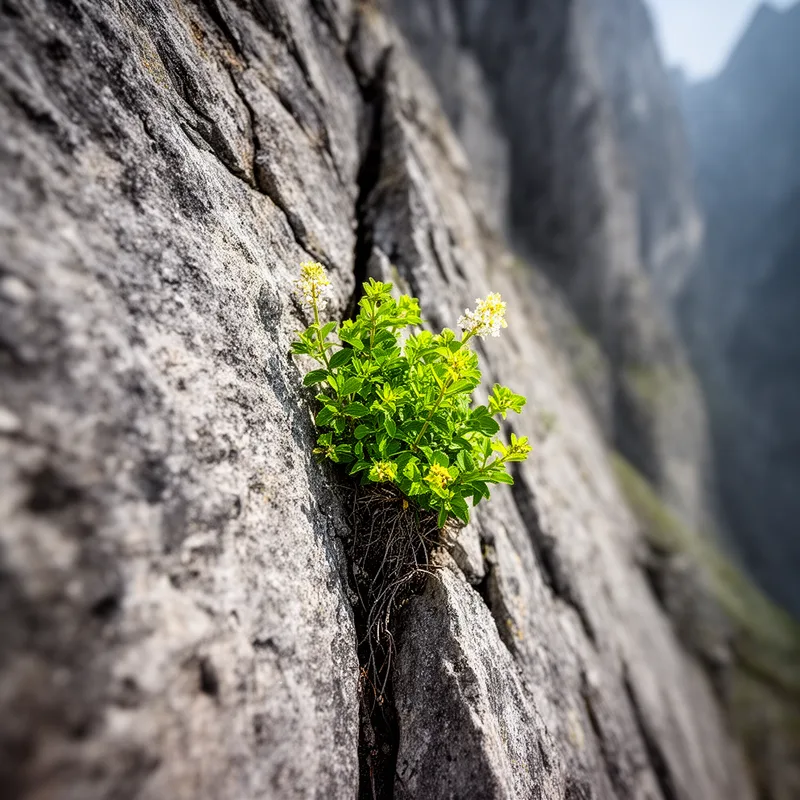
rupicolous plant
- noun
- /ˌruːpɪˈkoʊləs plænt/
- Specialized
- The rupicolous plant thrives on rocky cliffs.
Examples
-
The rupicolous plant species thrived in the cracks of the mountain cliffs.
-
This botanical garden features many unique rupicolous plants from arid regions.
-
A rupicolous plant typically adapts to harsh, rocky environments with minimal soil.
-
Can you identify a rupicolous plant in this area?
-
The rupicolous plant grew stubbornly in the crevices of the rugged boulders.
-
In the mountainous region, many rupicolous plants can be found clinging to the steep rocks.
-
The gardener collected various rupicolous plants that beautifully adorned the rocky landscape.
Synonyms

A plant that grows among rocks

A plant that grows among rocks

A plant that grows among rocks
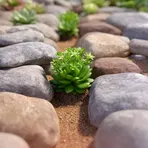
A plant that grows among rocks or in a rock garden
Surface Forms
Morphology
The meaning 'a plant that grows among or on rocks' is directly and compositionally derived from combining 'rupicolous' (thriving on rocky surfaces) with 'plant'. This adjective+noun pattern is standard and cross-linguistically common, so a learner who knows both constituent words would readily infer the MWE's meaning, although 'rupicolous' itself is a low-frequency technical term.
Etymology
Rupicolous plant comes from Latin words: one part, rupi-, means 'rock' and the other, -colous, means 'living on'. That's why it describes 'a plant that grows on rocks'.

