
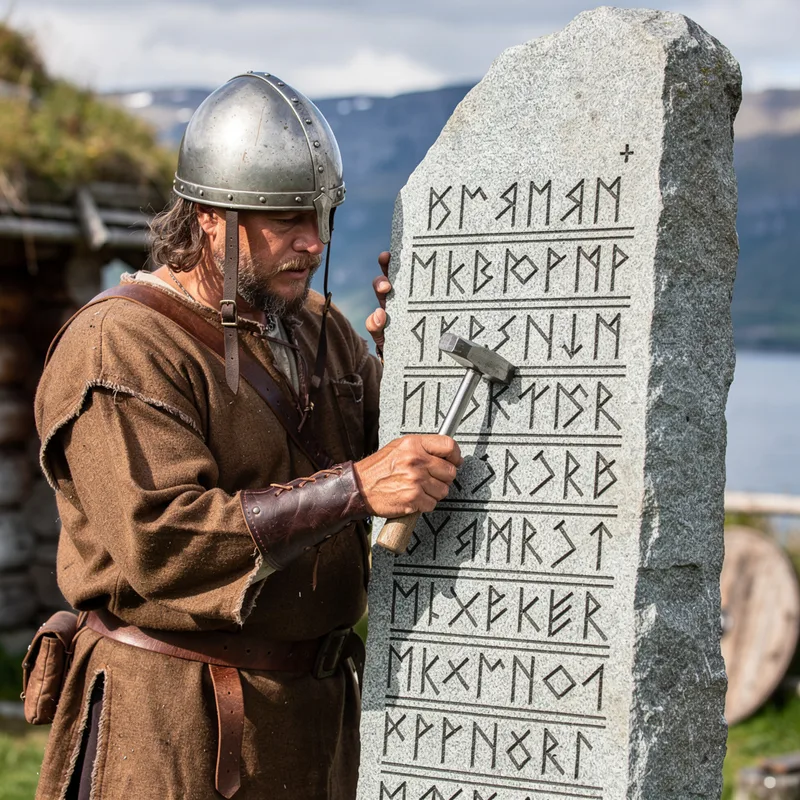
runic
 3
9.9
3
9.9

- adjective
- /ˈruːnɪk/
- Literature
- Inside the plastic cover was the pictograph of a horse with a rider holding a spear and a drum, with the title "The Wicker Men" spelled out in runic letters.
- runic inscription
Examples
-
The fundamental runic language we know of is Norse.
Blog text (23) -
The runic inscriptions on this bracteate are stamped on the circular image itself and include the magic form alu.
Academic text (1999) -
The sheet was large and closely written in a runic hand.
Fiction book (1993) -
Unfortunately, it is written in the runic language of the Sith.
-
Little stones with runic symbols on them that tell you your fortune.
-
Here, too, runic inscriptions appear that include the magic word alu.
Academic text (1999) -
The stone tablet featured ancient runic inscriptions that told the history of the Vikings.
-
Scholars study runic symbols to understand the beliefs of early Germanic tribes.
-
The museum displayed a collection of artifacts with runic writing from the medieval period.
Synonyms

Marked with old carved letters that people used in northern Europe long ago
Compounds
- Literature

 1
9.9
1
9.9
A letter from an old Germanic alphabet used long ago in northern Europe
Surface Forms
Morphology
Etymology
The word runic comes from the old Norse word rune, which meant 'secret' or 'mystery' and also a carved 'letter'. So, runic describes the ancient carved letters used by the Vikings and often feels mysterious because people long ago thought runes held special power.