
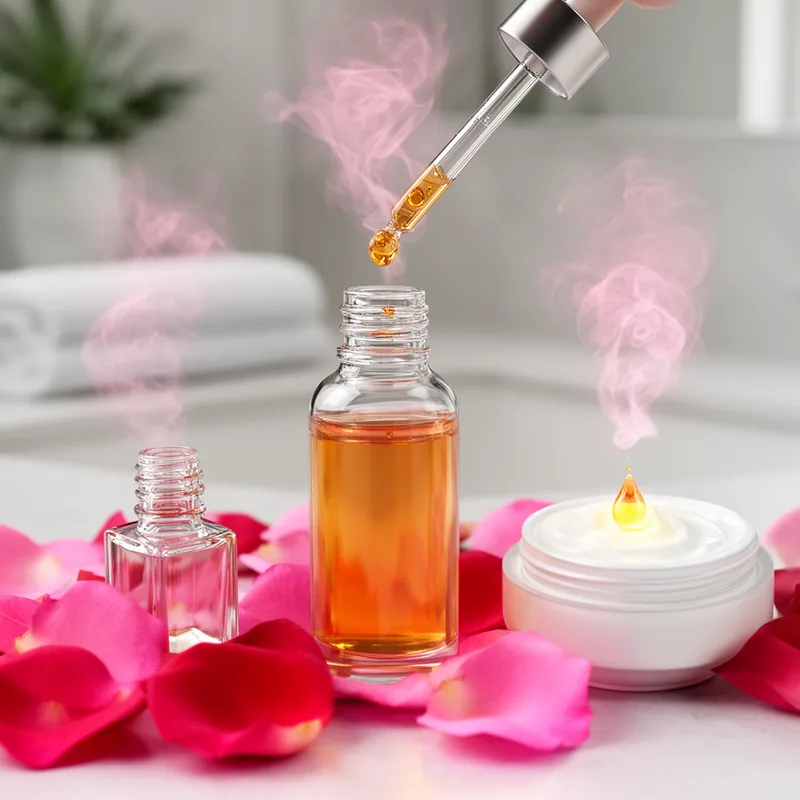
rose oil
 1
3.7
1
3.7

- noun
- /roʊz ɔɪl/
- The monks' most expensive product was a recipe that mixed rose oil with cloves, cinnamon, mace, musk, ambergris, citron, and cedar.
- rose oil from petals
Loading YouTube…
Watch on YouTubeSo I have this rose oil, which I love and I love how it smells.
- So I have this rose oil, which I love and I love how it smells.
- All right, next step, we got boil sauce, Vitamin E, rose oil.
- This is the squalene and vitamin C rose oil.
Examples
-
The bathroom was damp with condensation, the bath itself full of cold water smelling strongly of rose oil.
-
So I have this rose oil, which I love and I love how it smells.
-
I think I'm going to put some rose oil on my fingertips.
-
The bathroom was damp with condensation, the bath itself full of cold water smelling strongly of rose oil.
Fiction book (1994) -
There's rose oil, and there's sea buckthorn oil, which is really regenerative to the gums and the tissues.
Blog text (11) -
Smelling rose oil could lower adrenaline levels by 30 percent, helping you to de-stress, says one Japanese study.
-
Shira added a few drops of rose oil from an alabaster bottle to the water as I uncovered the drain that emptied into the gardens.
Synonyms
 14
3.7
14
3.7
A strong-smelling oil from a plant used in perfumes and to add scent to a room

A fragrant oil made from fresh roses used in perfume and cosmetics
How Fragrant


Surface Forms
Morphology
rose + oil
The meaning 'a fragrant oil obtained from roses' is directly derivable from combining 'rose' (the flower) with 'oil' (a liquid fat or extract): a compound denoting the oil made from roses. This noun–noun composition is a common and transparent word-formation pattern cross-linguistically, so a B1 learner who knows the constituents would readily understand it.
Etymology
Rose oil comes from the simple idea of taking the smell from rose petals: people press or soak soft rose petals to collect tiny drops of fragrant oil. That's why the name means 'a fragrant oil made from roses'.