
rolling stock
 2
5.3
2
5.3

- noun
- /ˈroʊlɪŋ stɑk/
- Specialized
- Meanwhile, rolling stock sits in the yard with empty seats.
- rolling stock for rail
- rolling stock for service
- new rolling stock
Loading YouTube…
Watch on YouTubeAnother thing would be, which is a particular rant of mine, you know, they spent, you know, hundreds of millions on new rolling stock for Thameslink.
- Another thing would be, which is a particular rant of mine, you know, they spent, you know, hundreds of millions on new rolling stock for Thameslink.
Examples
-
The rolling stock on the Cascades route is mostly owned by the two states.
Blog text (7) -
After a thorough inspection, the rolling stock was deemed safe for operation on the tracks.
-
Part of the reason was that rail yards are dangerous places, and not just because of the rolling stock.
Blog text (24) -
Some locomotives and rolling stock will find their way to Canada and Mexico.
Blog text (7) -
But buying more rolling stock for existing, at-capacity Urban Rail lines is probably just as good.
Blog text (29) -
It's up to Metrolink to leverage the new infrastructure for a new express service level based on suitable new rolling stock.
Blog text (14) -
NJ Transit's sister railroads in New York did move their rolling stock to higher ground on the Sunday night before the storm.
Blog text (28) -
The Virgin Rail Group of the United Kingdom awarded a $2.6 billion order to Bombardier Transportation for the supply and maintenance of new rolling stock for CrossCountry services.
Academic text (2000) -
Similar restorations of commuter rail in cities like Boston and improvements in either infrastructure or rolling stock in the NY Metro region have emerged in the past decade.
Blog text (24) -
The company invested in new rolling stock to modernize its freight services.
How Many


Surface Forms
Morphology
The phrase is compositionally built from 'rolling' (moving by turning) + 'stock' (a collection or supply), so a learner who knows both words can infer it denotes a collection of things that roll (i.e., vehicles). This pattern is cross-linguistically common (e.g., French 'matériel roulant', Spanish 'material rodante'), supporting immediate predictability for B1 learners.
Etymology
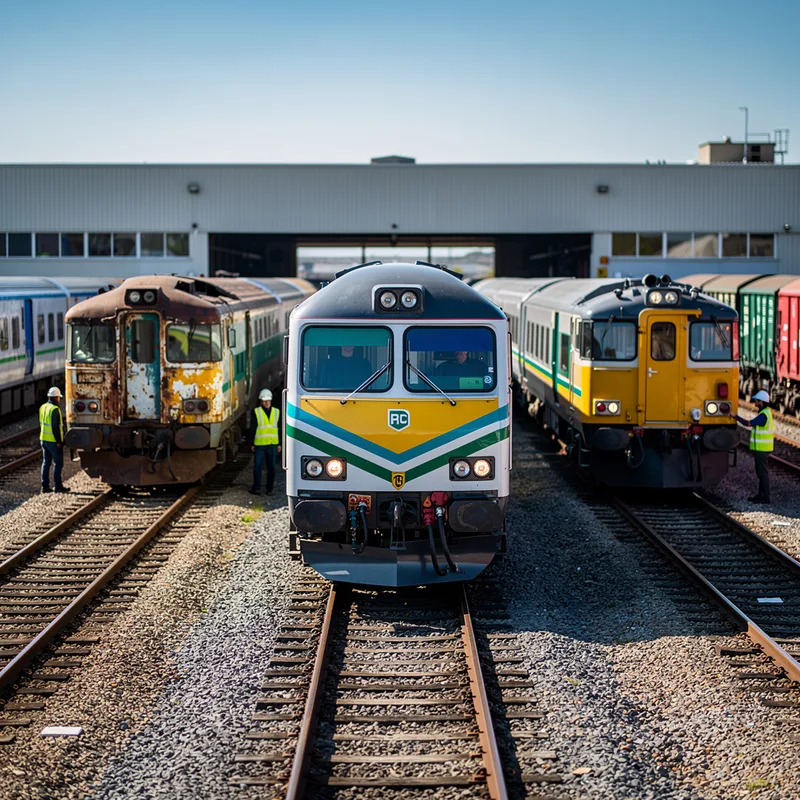
Rolling stock comes from a simple image: rolling is about wheels that turn and stock means 'things a company owns'. So rolling stock refers to the vehicles a railway owns that roll on tracks, like engines and carriages.