

roentgen
 2
9.9
2
9.9

- noun
- /ˈrɛntɡən/
- Archaic
- In 1895, Roentgen aimed his x-rays across his wife's outspread hand and onto a photographic plate.
Examples
-
And instead of miles per hour... we measure the rate in roentgens per hour.
-
If roentgen rays can't penetrate it, we know it's solid.
-
Roentgen realized that he had discovered a new form of highly penetrating radiation and named them X-rays to emphasize their mysterious nature.
Academic text (1991) -
The discovery of X-rays in the laboratory by German physicist Wilhelm Roentgen is now approaching its centennial anniversary.
Academic text (1991) -
Appropriately, a new x-ray observatory named ROSAT, for Roentgen Satellite, is now in orbit sending back a great deal of information about the universe as seen in x-rays.
Academic text (1991) -
The doctor noted that the patient had been exposed to 200 roentgens of radiation during the procedure.
-
Monitoring stations recorded an increase of 50 roentgens in the area after the test was conducted.
-
The safety guidelines recommend limiting exposure to no more than 100 roentgens per year.
Synonyms
 3
9.9
3
9.9
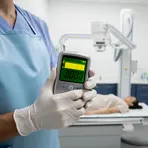
A unit for measuring radiation exposure
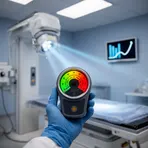
A unit for measuring how much X-ray or gamma radiation hits the air
Compounds

- Archaic
People use a very short wave of energy to take pictures of the inside of the body
Surface Forms
Etymology
Roentgen is named after the German scientist Röntgen, who discovered 'X-rays'. The unit was named for him and is used to measure how much 'X-rays' or other radiation a person or object has been exposed to, so the name reminds us it is a measure of radiation exposure.