
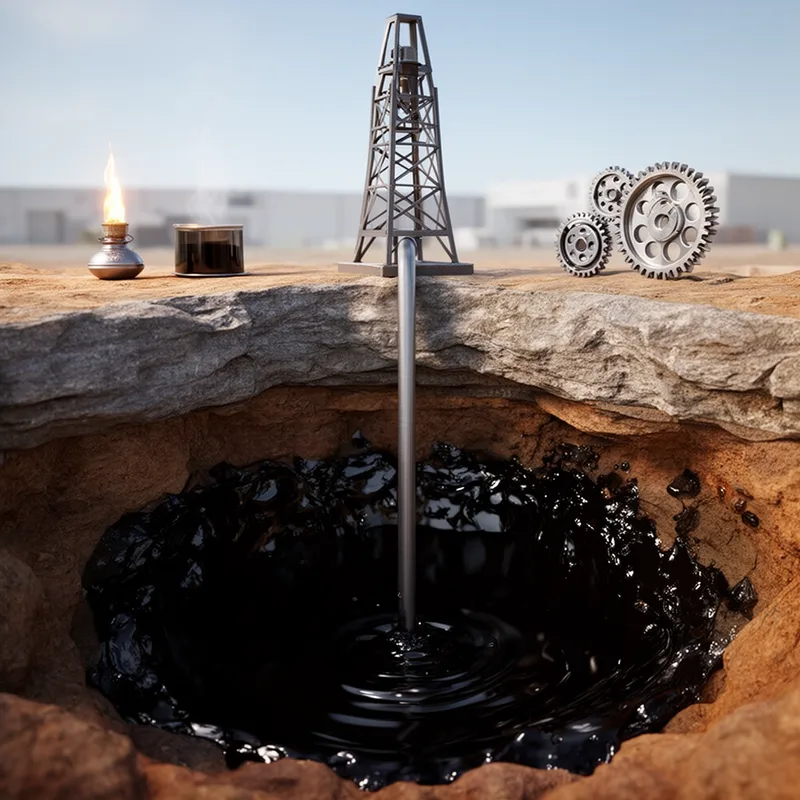
rock oil
- noun
- /rɑk ɔɪl/
- Archaic
- The discovery of rock oil transformed economies and led to the modern petroleum industry.
Examples
-
In the 19th century, people often referred to crude petroleum as rock oil.
-
Early industrialists used rock oil as a source of fuel and lubrication.
-
The rock oil industry has seen significant changes.
-
Many people are unaware of rock oil and its uses.
-
In the 19th century, people often referred to crude petroleum as rock oil.
-
Early industrialists used rock oil as a source of fuel and lubrication.
-
The discovery of rock oil transformed economies and led to the modern petroleum industry.
Synonyms

 100
4.4
100
4.4

A thick dark liquid found under the ground that people use to make fuels like gasoline and diesel
 66
5.5
66
5.5
Oil taken from the ground before it is made into fuel
 47
3.4
47
3.4
A thick black oil from under the ground used to make fuel

A dark natural oil from ancient plants and animals that people use for fuel and products
Surface Forms
Morphology
The compound 'rock oil' literally combines 'rock' and 'oil' to denote oil associated with rocks or the earth, so its meaning as petroleum/crude oil is directly derivable from the constituents. Although the term is now rare/archaic, the noun–noun composition follows regular English compounding patterns and would be understandable to a B1 learner who knows both words.
Etymology
Rock oil comes from the simple image of thick, black oil seeping out of the ground from rock layers, so people long ago named the dark liquid after where it came from. That's why rock oil means 'petroleum' or 'crude oil'.