
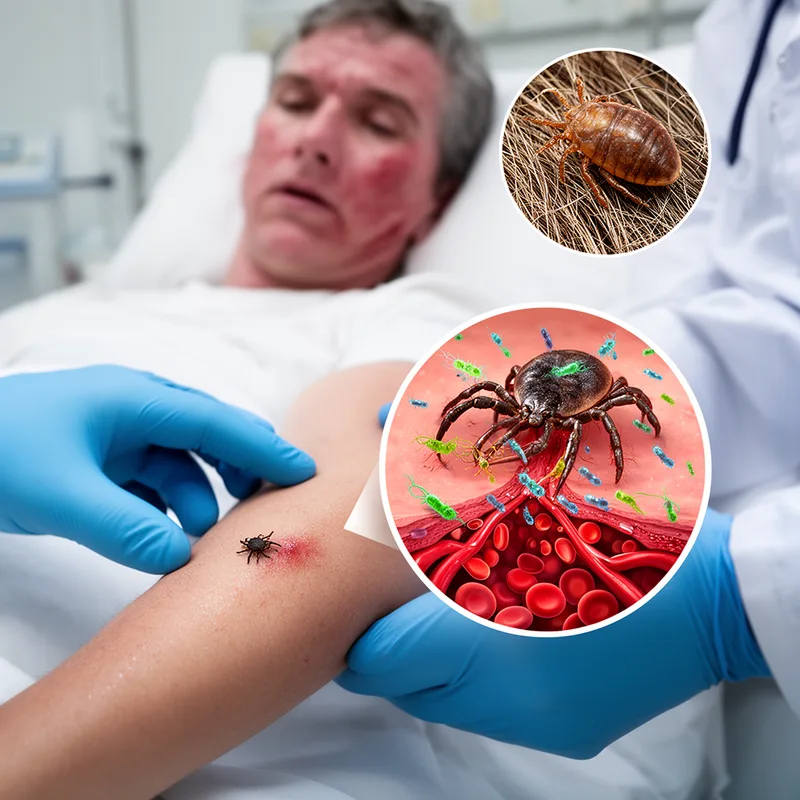
rickettsial
- adjective
- /rɪˈkɛtʃəl/
- Specialized
- rickettsial disease
Examples
-
Doxycycline was added for the expanded differential diagnosis of a rickettsial illness or plague.
Academic text (2014) -
Unrecognized rickettsial species are likely present in Sri Lanka, an island connected to the southern tip of India by an underwater 30-km land bridge.
Academic text (2012) -
Although part of the rickettsial triad, rash is often absent initially (10) and among unselected febrile patients (5, 14).
Academic text (2012) -
Table 2. Epidemiologic characteristics of patients with and without IgG evidence of rickettsial exposure at enrollment, southern Sri Lanka, 2007* pqp
Academic text (2012) -
In addition to coho salmon, other salmonid species, notably Atlantic salmon, chinook salmon, O. tshawytscha, and rainbow trout, have been found to be susceptible to the rickettsial infection.
Academic text (1992) -
The doctor diagnosed her with a rickettsial infection after she showed symptoms like fever and rash.
-
Research has shown that rickettsial diseases can be transmitted by specific types of ticks and fleas.
-
In some regions, people are at higher risk for rickettsial illnesses due to increased exposure to infected wildlife.
Compounds

- Specialized
An illness people get when ticks, mites, or lice spread tiny germs
Surface Forms
Morphology
rickettsial = rickettsia (transparent) = rickettsia + al
The adjective is formed regularly from the noun 'rickettsia' with the suffix '-al' meaning 'relating to'.
Etymology
Rickettsial comes from the bacteria name Rickettsia, which was named for a scientist called Howard Ricketts. The ending -ial means 'relating to', just like in bacterial. So rickettsial means 'relating to Rickettsia' or the illnesses these bacteria cause.

