
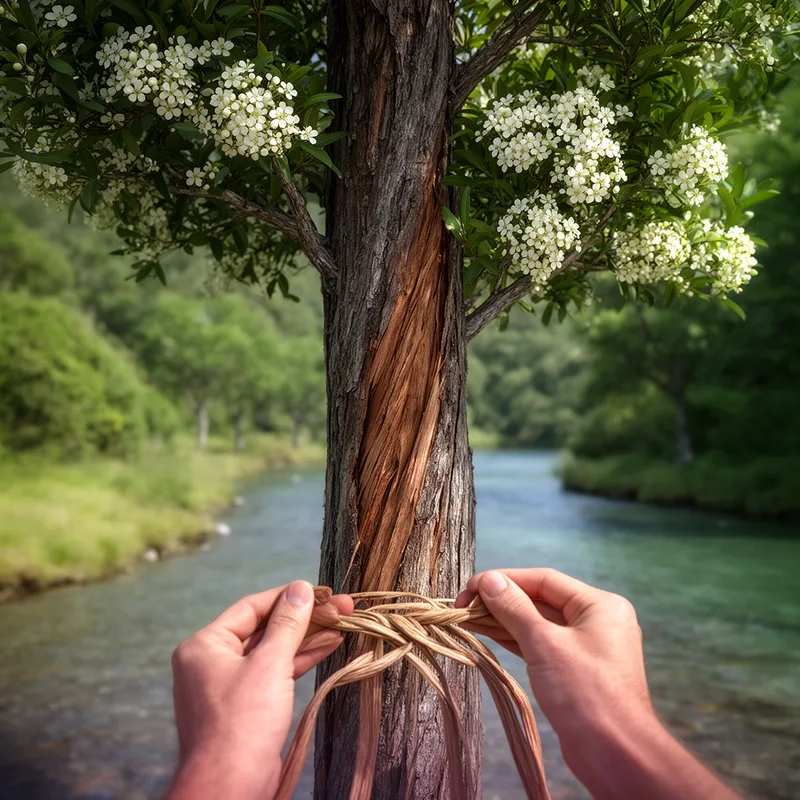
ribbonwood
- noun
- New Zealand
- The Maori people traditionally used the bark of the ribbonwood for weaving and making cords.
Examples
-
Researchers study ribbonwood fiber for its potential as a sustainable textile material.
-
The ribbonwood tree produces fragrant white flowers that attract many pollinators.
-
A single ribbonwood can grow quite tall and is often found in fertile river valleys.
-
The ribbonwood tree grows beautifully in the garden.
-
Have you ever seen a ribbonwood in bloom?
-
In the forests of New Zealand, the ribbonwood is known for its strong and durable fiber.
-
Traditional Maori crafts often feature items made from the bark of the ribbonwood.
Synonyms
A small New Zealand tree with fragrant clusters of white flowers and bark used to make rope
A small New Zealand tree with clusters of white flowers that smell like honey and bark used for making rope
A small New Zealand tree with clusters of white flowers that smell sweet and bark used to make rope
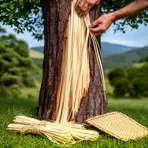
A New Zealand tree whose inner bark makes a strong fiber like flax
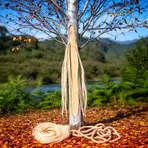
A tree from New Zealand that loses its leaves and has inner bark with strong fiber like flax
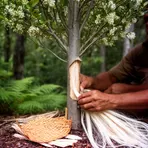
A tree from New Zealand whose inner bark makes a strong fibre for weaving
Surface Forms
Morphology
Etymology
Ribbonwood comes from the English parts ribbon and wood, named because the tree's bark peels into 'long, thin strips' like ribbons. That's why the name fits a New Zealand tree whose strong bark was traditionally used for weaving and making cords.

