

rhyolite


 1
9.9
1
9.9
- noun
- /ˈraɪəˌlaɪt/
- Specialized
 :
riolita
:
riolita
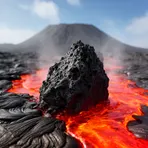
- At the geological site, researchers found large boulders of rhyolite, which were formed from lava that cooled rapidly after the eruption.
Examples
-
Rhyolite, Nevada—
Blog text (4) -
My guess is rhyolite, or basalt.
-
Rhyolite is often used in construction because it is a rhyolite, a light-coloured volcanic rock with a high silica content.
-
The hiking trails in the national park are surrounded by stunning cliffs made of rhyolite, showcasing its unique fine-grained structure.
Synonyms
 4
3.6
4
3.6
A hard rock made when hot melted rock cools on or near the Earth's surface
 1
4.1
1
4.1
A hard, solid material that forms when hot, melted rock cools
How Silica-rich

Surface Forms
Morphology
rhyolite = rhyol + ite
The first element 'rhyol-' is a technical combining form not recognizable as a standalone English word, and the mineral suffix '-ite' is specialized, so learners cannot derive 'volcanic rock' from the parts.
Etymology
Rhyolite comes from Greek parts rhyax meaning 'stream' and lithos meaning 'stone'. It was named because this light rock forms from silica-rich lava that flowed like a hot 'stream', so rhyolite is literally a 'stream-stone' and today means a light volcanic rock made from those lava flows.