
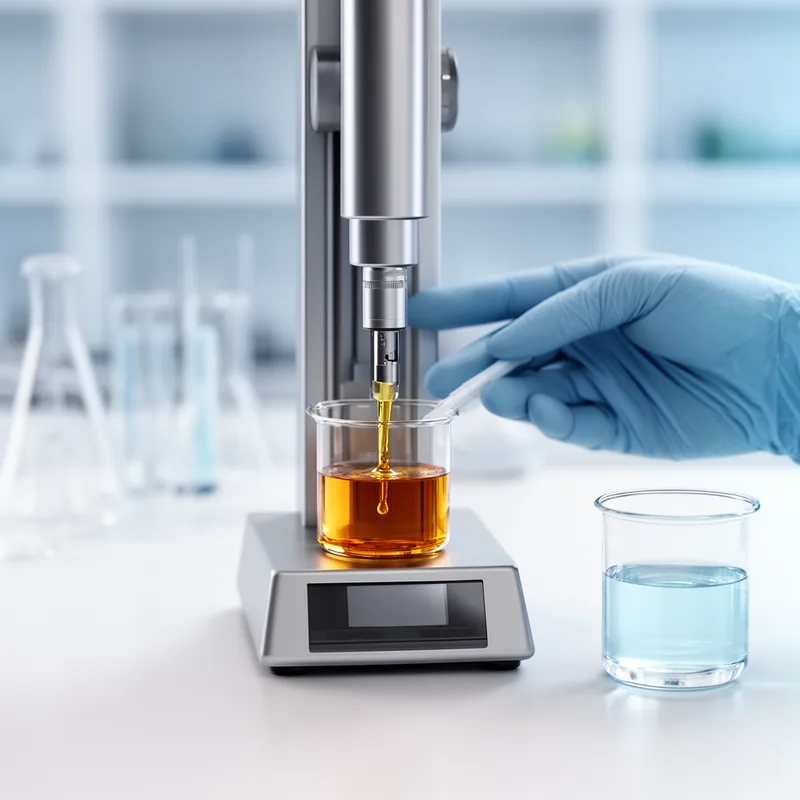
rheometer


 1
9.2
- noun
- /riˈɑːmɪtər/
- Specialized
- The scientists used the rheometer to accurately measure the viscosity of various liquids in their experiments.
Examples
-
In the laboratory, a rheometer helped researchers analyze how changes in temperature affect the flow of certain polymers.
-
The new rheometer provides an extended torque range, a new normal force sensor with high stability and accuracy, and a high thermal stability of the normal force signal.
Academic text (2004) -
The rheometer records the stress required to maintain a fixed strain.
Academic text (2005) -
Time and Temperature Scanning Rheometer
Academic text (2004) -
Circle number 184 on Reader Service Card Rheometer
Academic text (2002) -
Rheometers
Academic text (2004) -
This company has extended the low range of its 400 Series melt pressure transducers down to 0 to 150 psi for polymer extrusion and rheometer applications.
Academic text (1995) -
Anton Paar USA has announced its latest series of Physica MCR rheometers that offer a wide selection of measurement geometries.
Academic text (2004) -
Measuring the stress-strain curves of the gels involves placing the samples in a rheometer—essentially two parallel plates, one of which is movable.
Academic text (2005) -
The new rheometer allowed the team to determine the precise flow behavior of materials in medical applications.
Synonyms
 1
8.6
A tool that measures how thick a liquid is
A tool that measures how thick or runny a liquid is
How Precise
- Specialized
1
9.2

- Specialized
Surface Forms
Morphology
rheometer = rheo + meter
This is a classical scientific term built from bound forms meaning roughly flow plus measure, but an average B1 learner is unlikely to recover the meaning from those parts.
Etymology
Rheometer comes from the Greek root rheo- meaning 'flow' and the ending -meter meaning 'measure', just like in thermometer or speedometer. So a rheometer is a device that 'measures' how liquids 'flow', which explains its use to check viscosity.