
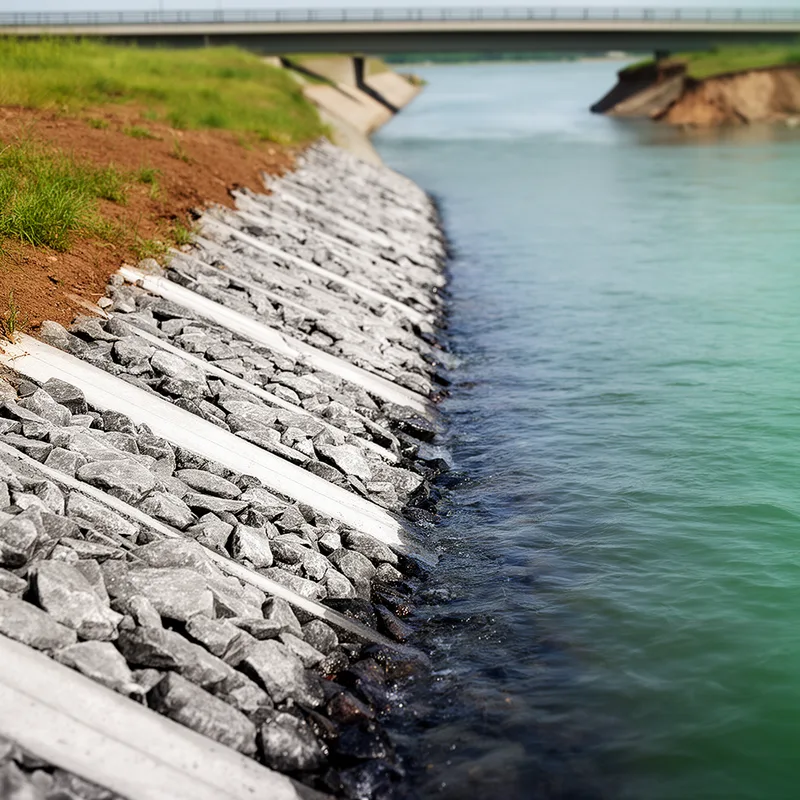
revetement
- noun
- /rəˈvetəmənt/
- UK
- The engineers installed a revetement along the riverbank to prevent erosion.
Examples
-
During construction, the slope was reinforced with a concrete revetement.
-
A stone revetement protects the highway embankment from flooding.
-
The new revetement protects the hillside from erosion.
-
Several revetements were installed along the riverbank.
-
A stone revetement protects the highway embankment from flooding.
-
During construction, the slope was reinforced with a concrete revetement.
-
The engineers installed a revetement along the riverbank to prevent erosion.
Synonyms

 5
4.4
5
4.4

A wall built to hold back soil or water on one side
 1
9.9
1
9.9
A wall of stone, concrete, or sandbags that protects a shore from waves and erosion

A layer of stone attached to the outside of a wall or riverbank to protect it
How Protective
- Specialized
14
3.9

- Specialized
5
6.4
- UK
- Specialized

 1
5.7
12
1.1
1
5.7
12
1.1
Surface Forms
Morphology
revetement = revet + ment
Although formed with the nominalizing suffix '-ment', the verbal base 'revet' is rare/technical and the whole word is a specialist borrowing, so knowing common morphemes would not let a B1 learner reliably infer the meaning.
Etymology
Revetement comes from the parts re- 'again' and vest 'to clothe'. Think of a slope being 'clothed' with stone or concrete to protect it, which is why a revetement is a protective covering for a wall or riverbank.