

reverberant
 1
8.0
1
8.0

- adjective
- /rɪˈvɜːrbərənt/
- Specialized
- The concert hall was designed to be reverberant, enhancing the richness of the orchestra's sound.
Examples
-
So it's a live room, a room that's reverberant like a church or a cathedral.
-
The police interview had been conducted in a reverberant room; however, the specific characteristics of the room were not known.
Academic text (2017) -
The main street of Perugia is possibly the most reverberant open-air space we've ever played in.
Blog text (3) -
Rather, it was soothing, honey-toned, with an appealing reverberant timbre.
Fiction book (1992) -
Carnegie Hall's fair size, it's larger than some of the other Symphony halls, and they're a lot more reverberant than La Scala.
-
Experiments in highly reverberant environments find listeners doing exactly that, using cues above 8000 Hz.
Academic text (1999) -
The melody resides primarily in a mid- and low range, and its sonic material is heavily reverberant, so we have a low-ceilinged space with a long sweep to the back.
Academic text (2017) -
In the cathedral, the reverberant acoustics allowed the choir's voices to resonate beautifully throughout the space.
-
We recorded the vocals in a reverberant room to give the song a more spacious and echoing quality.
Synonyms
 23
4.9
23
4.9
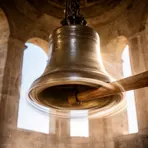
Very loud and clear, or very strong and complete when talking about success
 7
5.6
7
5.6
A deep clear sound that lasts for a while
 5
7.5
5
7.5
Making sound echo and last longer
 2
4.5
2
4.5
Having sounds that repeat and ring in a large empty room

Causing sound to echo and fill a room or hall

A sound that continues as echoes, like church bells in a valley

A sound or place where noises repeat and seem louder
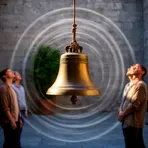
A deep, clear sound that continues or a strong effect that stays with you

Sounds repeat and seem far away like an echo
Antonyms


How Reverberant

Surface Forms
Morphology
reverberant = reverberate (transparent) = reverberate + ant
Formed by the regular adjectival derivation from the verb 'reverberate' with '-ant', so 'having the quality of reverberation' is predictable.
Etymology
Reverberant comes from Latin parts re- ('again') and verberare ('to strike' or 'to beat'), so it originally meant 'struck back' over and over. Think of a sound that keeps hitting the walls and coming back like an echo — you may know this effect as reverb in music. That's why a reverberant room or sound is full of repeated echoes.