

revaccination
- noun
- /ˌriːˌvæk.sɪˈneɪ.ʃən/
- Specialized
- Thus, much of the previous donor and recipient immunity to specific pathogens is lost, and HSCT programs generally carry out a comprehensive post-transplantation revaccination program.
Examples
-
Revaccination is important to maintain immunity against diseases like revaccination.
-
Revaccination may be advised after 5 years or more after the first dose.
Academic text (2007) -
Doctors recommend revaccination to ensure that patients stay protected over time.
-
The health department organized a campaign for revaccination to boost public immunity.
Synonyms
 20
3.7
20
3.7

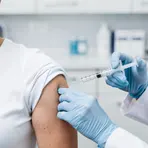
An extra vaccine dose given later to increase protection
 3
2.9
3
2.9
An extra vaccine dose you get after the first to make protection stronger

 1
3.9
1
3.9
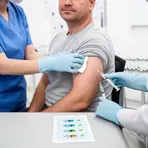
An extra vaccine dose given after the first doses to increase protection

An extra vaccine or medicine given later to make the first one work well
Surface Forms
Morphology
revaccination = vaccination (transparent) = re + vaccine + ation
The prefix 're-' straightforwardly adds the meaning 'again' to 'vaccination'.
Etymology
The word revaccination starts with re- meaning 'again' and the vaccine part comes from the Latin vacca meaning 'cow', because the first vaccines came from a cow illness. So revaccination means 'giving a vaccine again' to renew or boost your protection.