
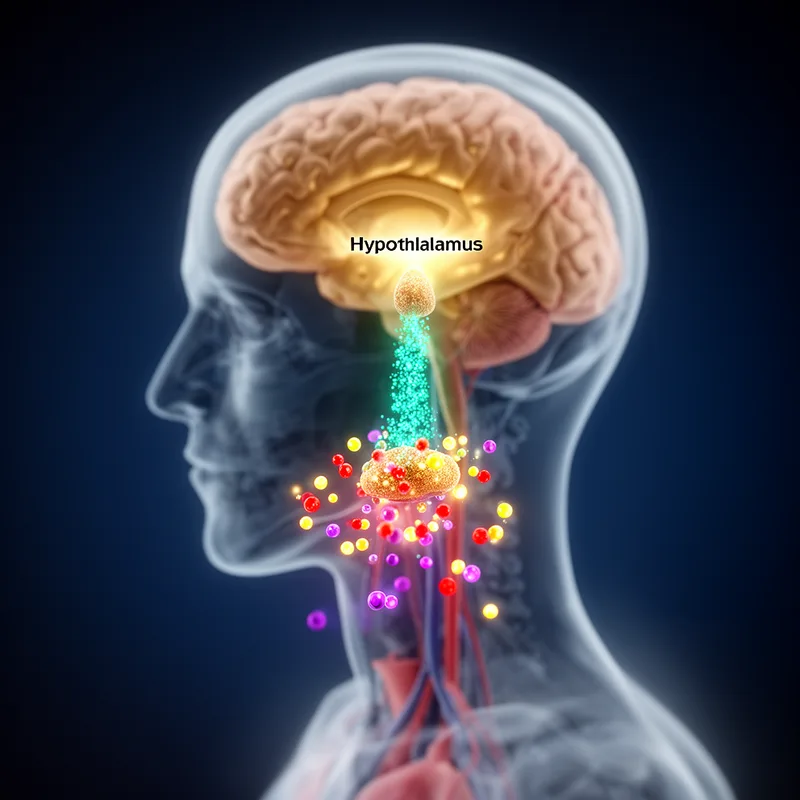
releasing hormone


 1
6.1
1
6.1
- noun
- /rɪˈliːsɪŋ ˈhɔːrmoʊn/
- Specialized
- Gonadotropin-releasing hormone is crucial for regulating the menstrual cycle by stimulating the release of other hormones.
- gonadotrophin-releasing hormone
Examples
-
One, your body may be releasing hormones in response to low glucose levels.
Blog text (19) -
The cycle is initiated in the pre-ovulatory phase by gonadotrophin-releasing hormone (GnRH).
Academic text (2015) -
Kidney and long-term or indwelling gonadotropin-releasing hormone (GnRH) vigorously as the doctor.
Blog text (24) -
Goserelin and leuprorelin are gonadotrophin-releasing hormone analogues (GnRHa) that act on the pituitary gland.
Academic text (2012) -
The pituitary gland responds to gonadotropin-releasing hormone by producing luteinizing hormone and follicle-stimulating hormone.
-
Research has shown that gonadotropin-releasing hormone can influence reproductive health by controlling hormone levels.
Synonyms
 5
9.6
5
9.6
A chemical made by the hypothalamus that makes the pituitary gland release a hormone
 1
8.9
1
8.9
A hormone from the brain that tells the pituitary to release other hormones

A chemical made in the brain that tells the pituitary gland to release specific hormones
A chemical made in the hypothalamus that tells the pituitary gland to release other hormones

A chemical made in the hypothalamus that tells the pituitary gland to send out a certain hormone
Surface Forms
Morphology
The phrase is compositional: 'releasing' (causing a release) modifies 'hormone', so a learner who knows both words can infer it denotes a hormone that causes or stimulates release (in this case, other hormones). The precise anatomical details (hypothalamus, anterior pituitary) are technical, but the core meaning is directly derivable from the constituents.
Etymology
Releasing hormone gives a simple picture: releasing means 'letting out' and hormone is a chemical messenger in the body. So, a releasing hormone is a chemical from one part of the brain that tells another gland to 'release' its hormones.