

releasing factor
- noun
- /rɪˈliːsɪŋ ˈfæktər/
- Specialized
 :
factor de liberación
:
factor de liberación
- Researchers discovered a new releasing factor in the brain.
- corticotropin-releasing factor
Examples
-
An abnormality in a releasing factor can disrupt the balance of hormones in the body.
-
The hypothalamus secretes a releasing factor to prompt the pituitary gland to produce growth hormone.
-
Scientists are studying how each releasing factor controls various endocrine responses.
-
The releasing factor stimulates hormone secretion.
-
Luteinizing hormone releasing factor stimulates the anterior pituitary to produce luteinizing hormone.
-
The hypothalamus secretes corticotrophin releasing factor in response to stress.
-
Thyrotropin-releasing hormone acts as a releasing factor for the secretion of thyroid-stimulating hormone.
Synonyms

 5
9.6
5
9.6

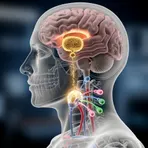
A chemical made by the hypothalamus that makes the pituitary gland release a hormone
 1
8.9
1
8.9
A hormone from the brain that tells the pituitary to release other hormones


 1
6.1
1
6.1
A hormone made in the brain that tells the pituitary gland to release other hormones
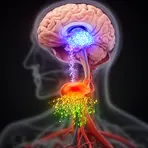
A chemical made in the hypothalamus that tells the pituitary gland to release other hormones

A chemical made in the brain that tells the pituitary gland to release specific hormones
Surface Forms
Morphology
The meaning is directly and compositionally derived from 'releasing' (causing release) + 'factor' (an element that influences an outcome), so a B1 learner who knows both constituents can infer it denotes an element that causes release. Although the term is used in a technical biomedical sense (a hormone causing another hormone's release), that specific domain usage does not change its transparent, predictable structure.
Etymology
The term releasing factor comes from a simple image: releasing means making something come out and factor means a thing that causes change, so together it is 'a thing that causes release'. In the body, a releasing factor is a substance that tells a gland to release a specific hormone, which is why the name fits its meaning.