
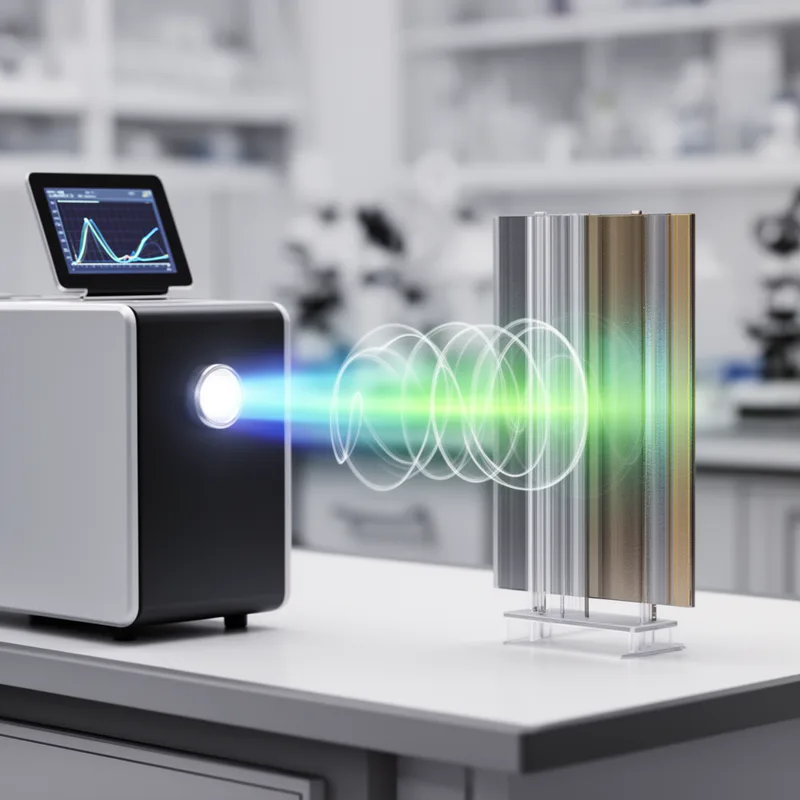
reflectometry


 1
9.5
- noun
- /rɪˌflɛkˈtɒmətri/
- Specialized
- The use of reflectometry allows researchers to analyze material properties by examining reflected waves.
- acoustic reflectometry
- domain reflectometry
- time-domain reflectometry
Examples
-
Diagnostic tests include pneumatic otoscopy, audiometry (including tympanometry), and acoustic reflectometry.
Academic text (2004) -
The device uses principles of acoustic reflectometry to classify patients into five categories of risk for middle ear effusion (Table 1).
Academic text (2004) -
The results of acoustic reflectometry were compared with the diagnoses rendered by tympanometry.
Academic text (2004) -
MDI Instruments, a division of Becton, Dickinson & Co., provided the acoustic reflectometry devices used in this study.
Academic text (2004) -
Acoustic reflectometry also correctly identified 76 of 81 ears as normal, for a specificity of 93.8%.
Academic text (2004) -
Acoustic reflectometry was introduced in 1984 as a method of improving the diagnosis of otitis media with effusion (OME), particularly in children.
Academic text (2004) -
Acoustic reflectometry measures how sound waves bounce back to help diagnose ear conditions.
-
Doctors rely on reflectometry to assess the function of the middle ear during medical examinations.
Surface Forms
Morphology
Etymology
The word reflectometry starts with reflect, meaning 'to send back', and ends with -metry, meaning 'measure', like in thermometer. So reflectometry is the measurement of waves that are sent back to learn about a material.