
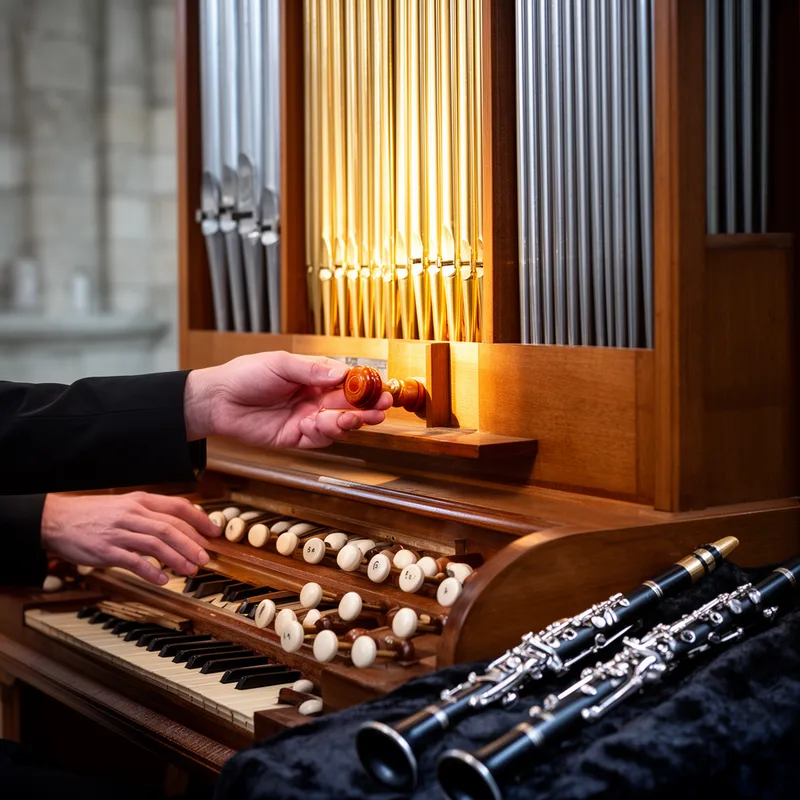
reed stop
- noun
- /rid stɑp/
- Specialized
- The cathedral organist added a reed stop to give the music a brighter timbre.
Examples
-
Many composers specify the use of the reed stop in their organ pieces for its distinctive sound.
-
A skilled organ builder can carefully voice each reed stop to match the acoustics of the church.
-
The organ features a beautiful reed stop.
-
Can you play the reed stop on the organ?
-
The composer wrote intricate pieces that utilize the reed stop to replicate the rich tones of woodwind instruments.
-
In the concert hall, the reed stop on the organ added a warm, resonant quality to the choir's performance.
-
During the rehearsal, the organist adjusted the reed stop to enhance the clarity of the melody.
Synonyms

 8
8.9
8
8.9

A knob on a pipe organ that controls which pipes sound

A group of pipes on an organ that make a particular sound when you choose them
How Soft

Surface Forms
Morphology
This is a straightforward noun–noun compound where 'reed' specifies the kind of 'stop' (a stop that produces or uses reed sounds/reeds). Even though it is a technical organ term, the meaning ('a stop characterized by reeds or reed-like sound') is directly derivable from the constituents and follows common compounding patterns, so a learner who knows both words can infer it.
Etymology
Reed stop comes from organ pipes that use a thin metal reed inside the pipe that vibrates to make a buzzy sound like an oboe or clarinet. The stop is the control that turns this sound on, so the name tells you it makes a 'reed' instrument sound.