
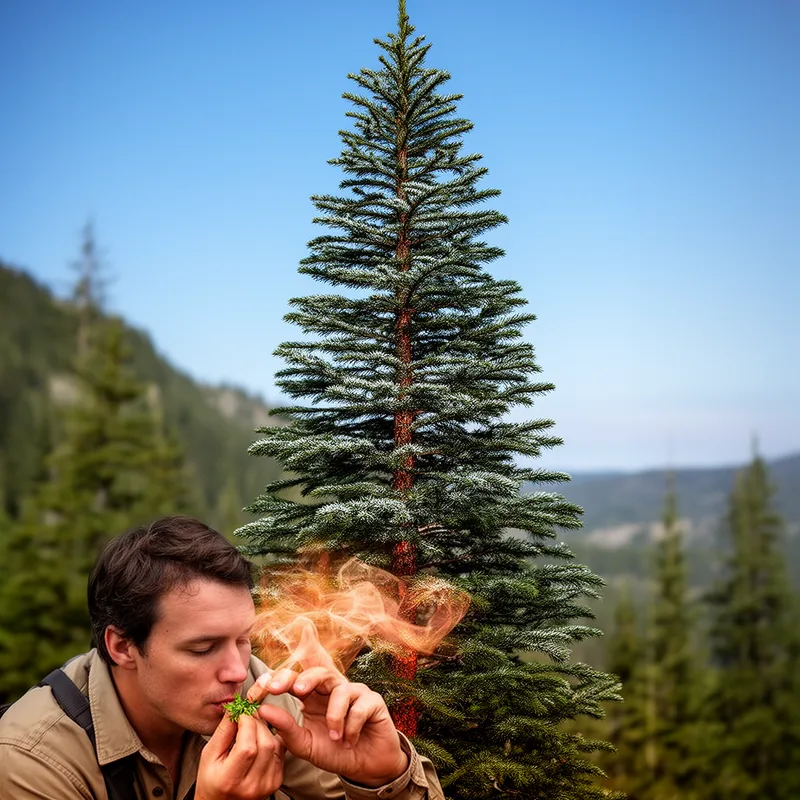
red silver fir
- noun
- US
- Botanists identified the tree as a red silver fir by its tiered branches and orange-scented leaves.
Examples
-
The red silver fir is commonly found in the forests of western North America.
-
A mature red silver fir can reach impressive heights and has a striking conical shape.
-
Look at that red silver fir!
-
The red silver fir is known for its aromatic needles.
-
Botanists identified the tree as a red silver fir by its tiered branches and orange-scented leaves.
-
A mature red silver fir can reach impressive heights and has a striking conical shape.
-
The red silver fir is commonly found in the forests of western North America.
Synonyms


 1
8.7
A medium to tall fir from western North America with a cone-shaped top, horizontal branches, and orange-smelling needles when crushed
 1
7.7
A medium to tall fir from western North America with tiered branches and orange-scented needles when crushed
 1
9.9
A medium to tall fir tree from western North America with leaves that smell like an orange when crushed
Surface Forms
Morphology
This is a straightforward descriptive noun phrase composed of two color adjectives plus the noun 'fir', so a B1 learner who knows 'red', 'silver', and 'fir' can infer it denotes a fir tree with a red-silver (pale metallic) coloration or sheen. The meaning is directly built from the constituents and follows common adjective+noun composition patterns, making the expression immediately understandable even if specific botanical details are unfamiliar.
Etymology
Red silver fir is a name that comes from the tree's look: the bark or cones can appear red, the needles often shine silver, and it is a type of fir. So the 'name' points to this particular fir from western North America with a tall, cone shape and orange-scented leaves.