
reciprocating engine


 1
6.7
1
6.7
- noun
- /rɪˈsɪprəˌkeɪtɪŋ ˈɛnʤɪn/
- Specialized
- For the two reciprocating engines tested, the analyzers were located outdoors and the engines were not purged.
- turbines and reciprocating engine
Examples
-
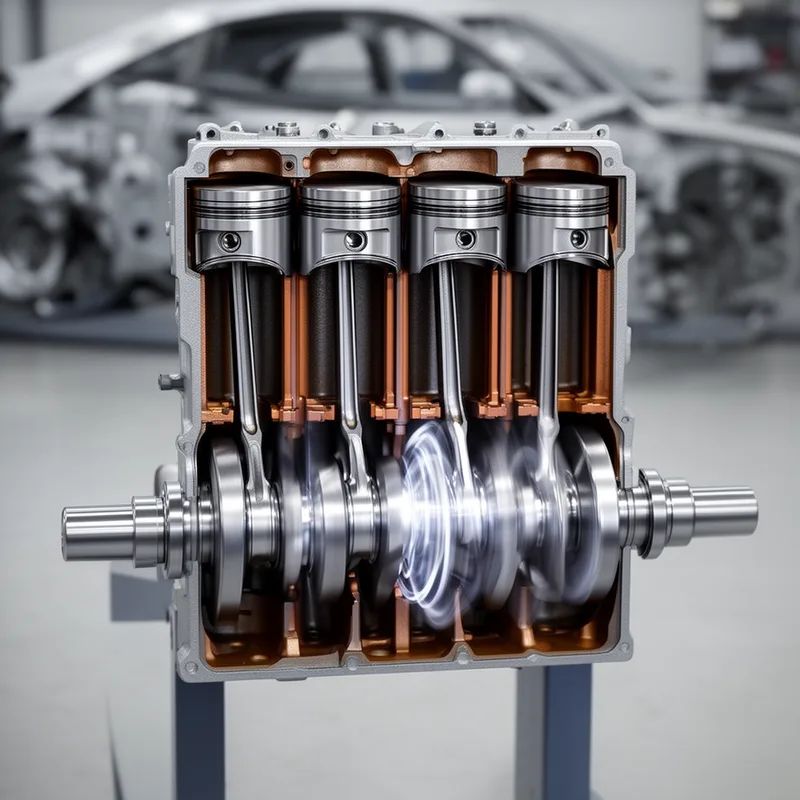
The cylinders started to move up and down through the water, and then they began to move in sequence, almost as if they were part of a four-piston reciprocating engine.
Academic text (2010) -
The methane gas produced during the organic treatment process was captured and used to operate the reciprocating engines to generate electricity.
Academic text (2002) -
- If we keep her in steam, we can cross connect from the supply lines through reciprocating engines.
-
Our best shot is probably of the reciprocating engines on the starboard side, right?
-
There is a large air shaft here for light and air to ventilate the reciprocating engine room.
-
There's a natural weak spot here in the hull right above the reciprocating engine room.
-
One of the advanced engine concepts being considered is a nearly constant RPM reciprocating engine with a variable expansion ratio.
Academic text (2002) -
The tests conducted with the sensor-based analyzer demonstrate that the system can operate on representative turbines and reciprocating engines.
Academic text (1996) -
The FR-1 was nearly unique in that it was a twin-engine aircraft; at the front was a reciprocating engine with a traditional propeller, and in the fuselage was a GE jet engine.
Blog text (1) -
The reciprocating engine powers many small aircraft due to its efficient design.
How Powerful
- Specialized
14
3.7

- Specialized
91
3.9
- Specialized
6
2.8
- Specialized
1
6.7
Surface Forms
Morphology
The compound combines 'reciprocate' (move alternately/back-and-forth) with 'engine' (a machine), so its meaning — an engine whose parts move back-and-forth (pistons moving up and down) — is directly derivable from the constituents. This is a regular compositional technical compound found cross-linguistically, so a learner who knows both words would readily infer the MWE meaning.
Etymology
Reciprocating engine gets its name from the clear 'back-and-forth' motion inside: pistons move up and down in cylinders and push a shaft that turns to make power. That's why the term means an engine where parts move 'back and forth' to create motion.