

receptor
 61
6.1
61
6.1

- noun
- /rɪˈsɛptər/
- Specialized
- When the neurotransmitter attaches to the receptor, it triggers a response in the nerve cell.
- sensory receptors
- cell receptor
- receptor binding
Loading YouTube…
Watch on YouTubeThat is, it can bind to the BDNF receptor, it can mimic BDNF.
- That is, it can bind to the BDNF receptor, it can mimic BDNF.
- So men get their androgen receptor gene from their mother.
- No two people have the same set, or these are self receptors.
- It actually fits in the MU opioid receptor.
- So that you're exactly right, it was missing the Co receptor.
- So dopamine, for example, has, we think, five families of receptors.
- It's they act as agonists at that receptor.
- There are receptors in our brain that are already wired and natural.
- So when women are born, our brains come equipped with estrogen receptors.
- But those receptors are most common in the lungs and in the Airways.
- They work by blocking your alpha receptors.
Examples
-
The clinical effects of antipsychotic drugs are thought to involve dopamine receptor blockade in the brain.
Academic text (1990) -
Every lymphocyte has a specific receptor with unique specificity.
-
And the T cell receptor has two chains.
-
When the drug binds to the receptor, a complex is formed that may produce two results.
Academic text (2011) -
And when the growth hormone locks into the receptor, we begin growing.
-
And it's the same receptor that the SARS virus clicked into.
-
And those cancer cells that have these receptors will respond to EPO by growing.
-
They've identified these receptors in the brain that activate specific circuits.
-
Its nose has over 220 million scent receptors.
-
You inject him with this drug, and it blocks the opiate receptors in the brain.
Synonyms
 1
5.8
1
5.8
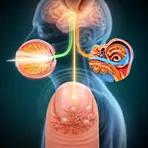
A body part that senses touch, light, or sound and sends signals to the brain
Antonyms
Compounds
- Specialized
1
5.8
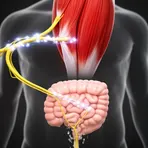
A body part that senses touch, light, or sound and sends signals to the brain

- Specialized

 1
6.5
1
6.5
Part of some cells, especially in the heart and blood vessels, that receives adrenaline and makes the heart beat faster


- Specialized
A part on nerve cells that reacts to certain signals and makes the heart beat faster or blood vessels widen

- Specialized
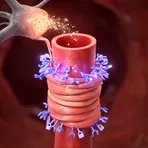
A part on nerve cells that makes blood vessels and muscles in organs tighten
- Specialized
A protein on nerve and blood vessel cells that reacts to body chemicals to make vessels narrow and muscles contract
Surface Forms
Morphology
receptor = receive (semi-transparent) = recept + or
Formally an agent/thing-forming suffix '-or' added to a Latin-based stem meaning 'receive'; the sense is predictable but the stem's form ('recept-') differs from the familiar English verb 'receive', which may confuse learners.
Etymology
The word receptor comes from the Latin recipere, which means 'to receive' or 'to take'. Like the common verb receive, a receptor is a part of the body that 'receives' signals and then responds to them.