

to read lips
 11
5.7
11
5.7

- phrasal verb
- She learned to read lips so she could better communicate with her deaf friends.
- learned to read lips
- speak and read lips
- read lips," he said
Loading YouTube…
Watch on YouTubeBut if you don't read lips, for example, in situations like talking on the telephone, can you understand someone on the telephone?
- But if you don't read lips, for example, in situations like talking on the telephone, can you understand someone on the telephone?
Examples
-
I noticed they took great pains to make sure I understood them because they knew I read lips, and this really touched me.
Blog text (25) -
Be careful, Nina, she can read lips.
-
Um, he can probably read lips.
-
- Say, can you read lips?
-
Any chance you can improve your ability to read lips in a meeting?
Blog text (1) -
"Is it hard learning how to read lips?"
Fiction book (1999) -
- Shh, I can read lips.
-
Freddie, he can read lips.
-
She can read lips if you talk straight to her.
-
But if you don't read lips, for example, in situations like talking on the telephone, can you understand someone on the telephone?
Synonyms
 4
7.2
4
7.2
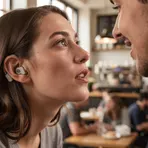
Understand what someone says by looking at their mouth

To understand what someone says by watching their lips
How Well
11
5.7

Surface Forms
Morphology
The meaning 'to understand what someone is saying by studying the movements of their lips' is directly derivable from combining 'read' (to make sense of signs) with 'lips' (the mouth's edges): it literally means reading visual signals from lips. This compositional pattern is cross-linguistically common (e.g. Spanish 'leer los labios', French 'lire sur les lèvres') and thus a B1 learner who knows both constituents would readily infer the meaning.
Etymology
The verb read lips comes from the simple picture of watching someone's lips and reading their mouth movements as if they were words. People who could not hear learned to do this to follow conversations, so read lips now means 'to understand speech without hearing'.