
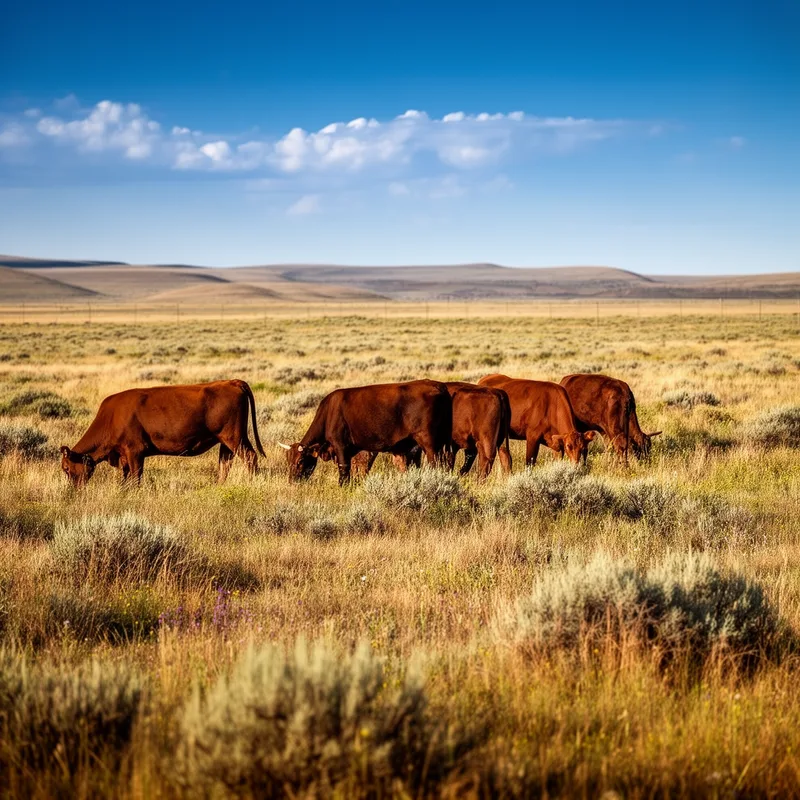
rangeland
 2
6.6
2
6.6

- noun
- /ˈreɪndʒˌlænd/
- To ensure success when reseeding deteriorated rangelands, compatible symbiotic associations among fungi and seedlings must also be reestablished.
- grazing rangeland
- rangeland scientist
- semiarid rangelands
Examples
-
The rancher uses the rangeland to graze his cattle throughout the summer.
-
Moreover, the potential productive capacity of the rangelands was fundamentally weakened.
Academic text (2008) -
One of the program's basic premises is that rangeland health is directly related to the distribution of soil resources.
Academic text (1994) -
A record 54 percent of pasture and rangeland is in poor or very poor condition.
Blog text (6) -
ARS scientists at 11 locations across western rangelands are doing just that.
Academic text (1997) -
To save forage and crops, the only option was to spray the rangeland with pesticides.
Academic text (1996) -
Seventy-five percent of the U.S. sheep industry relies on grazing rangeland, much of it publicly owned.
Academic text (1995) -
But arid and semiarid rangelands make up about 40 percent of the Earth's land surface.
Academic text (1994) -
The environmental consequence of these measures, namely the degradation of Tunisia's rangelands, has rarely been a central consideration, however.
Academic text (1996) -
PHOTOS (COLOR): Top photo: Completely covered with leafy spurge, this Montana rangeland was useless for cattle grazing.
Academic text (1994)
Synonyms
 102
1.4
102
1.4
Land with grass where farm animals eat
 85
1.0
85
1.0
A field of grass and wildflowers in the countryside
 69
3.5
69
3.5
A large open area of grass where animals graze
 20
2.7
20
2.7
An open area covered mainly with grass where animals live or graze
 8
7.5
8
7.5
A large flat area of grass with few or no trees
 3
2.5
3
2.5
Land with grass where animals like cows or sheep eat
 2
3.7
2
3.7
Land covered with grass where cows or sheep eat
 2
2.6
2
2.6
Land with grass where farm animals eat
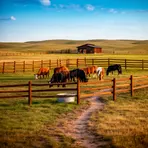 2
3.5
2
3.5
Land used for keeping animals like cows and horses


 1
3.1
1
3.1
Open land with grass and wildflowers where animals graze
 1
8.1
1
8.1
An open field of grass where animals graze
How Big

Surface Forms
Morphology
Etymology
Rangeland comes from range, which meant 'an area for animals to roam', and land, which means 'ground'. So rangeland is ground where animals like cattle or sheep can graze and move freely.