
raga
 1
9.8

- noun
- /ˈrɑːɡə/
- Specialized
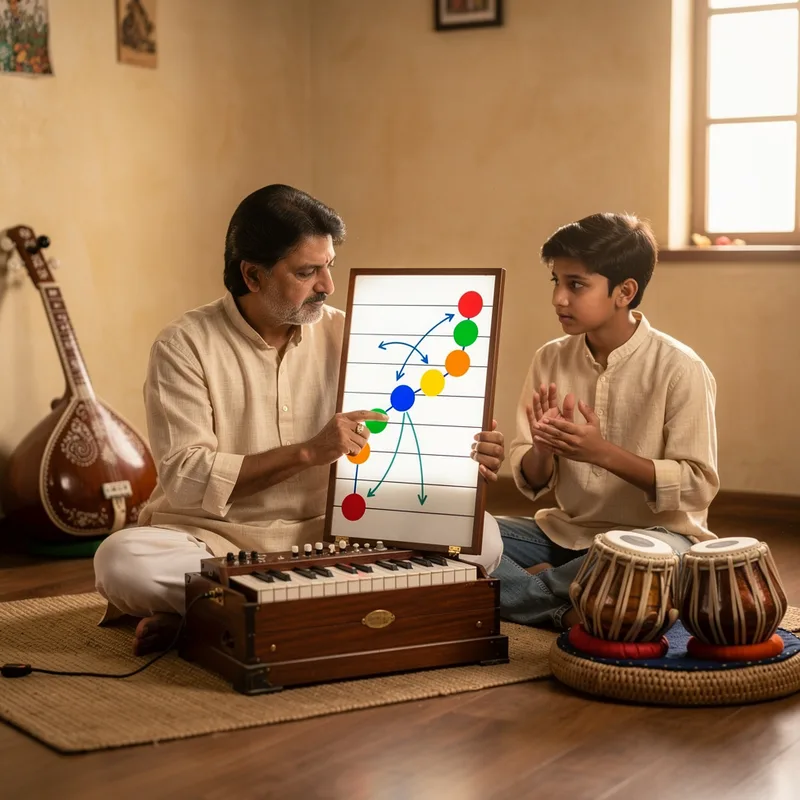
- In Indian classical music, a raga is an essential framework that guides the improvisation of melodies.
- Indian raga
Examples
-
Perhaps Ravi Shankar improvising a six-hour raga on the sitar could give an idea of his mind.
Fiction book (2002) -
Each raga evokes a certain emotion like love, sorrow, hatred, peace, etc.
Blog text (19) -
One must learn whether an Indian raga expresses the feelings of morning or evening.
Academic text (1993) -
In this practice, the performer bends a sustained pitch after the initial attack as a way to develop the mood of the raga.
Academic text (2015) -
Are they broadening their musical education through exposure to ragas, klezmer, and spirituals?
Academic text (2005) -
Their music is based on ragas (scales) and has been influenced by early and ongoing cultural exchange with North India (Moisala 2000).
Academic text (2016) -
Ravi Shankar is perhaps the most famous raga virtuoso (to us Westerners).
Blog text (7) -
Areas of focus might include Indian ragas, the Javanese gamelan, Gypsy music, the Appalachian folk song tradition, spirituals, and the blues.
Academic text (1998) -
If we have learned to teach the clarinet or violin, we can learn to teach guitar; similarly, if we have analyzed the music of J. S. Bach or Indian raga, we can certainly discern and teach the forms of today's popular music.
Academic text (2011) -
Additionally, performance skills in other sophisticated music styles—American jazz, Irish Celtic music, Argentinean tango, and Indian raga, among a myriad—traditionally have been aurally developed and maintained.
Academic text (2012)
Surface Forms
Etymology
Raga comes from an old Indian word raga that means 'color' or 'passion'. Think of a raga as a pattern of notes that 'paints' music with a mood, which is why a raga is used to bring out particular feelings.