
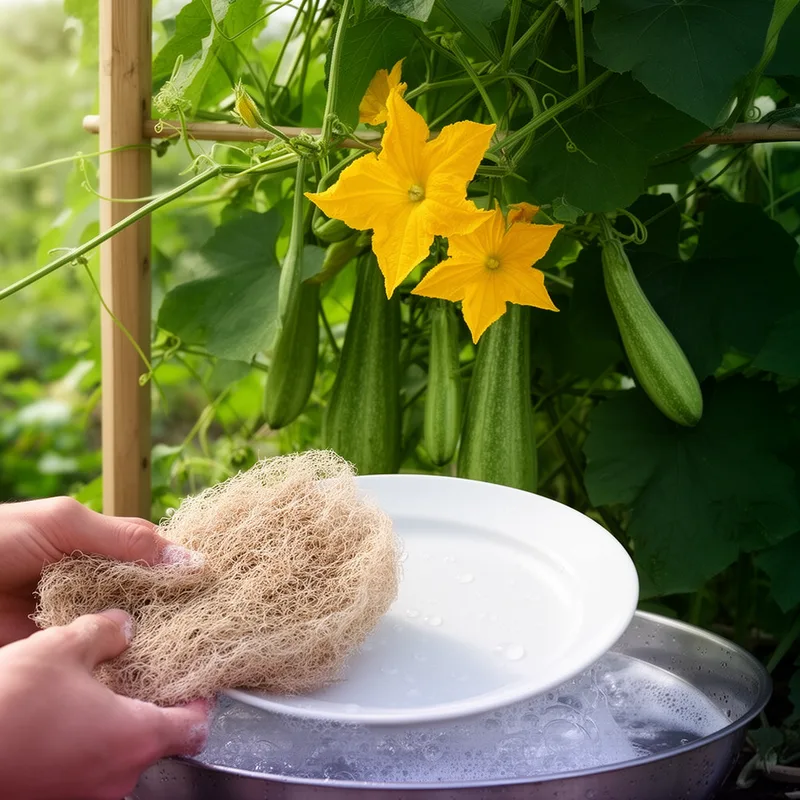
rag gourd
- noun
- Indian
 :
calabaza esponja
:
calabaza esponja
- Farmers cultivate rag gourds both for food and for the fibrous sponges inside their mature fruit.
Examples
-
The young fruits of the rag gourd are often eaten as vegetables in tropical countries.
-
She uses a dried rag gourd to scrub her dishes instead of a synthetic sponge.
-
I bought a rag gourd from the local market.
-
The rag gourd plant thrives in tropical climates.
-
Farmers cultivate rag gourds both for food and for the fibrous sponges inside their mature fruit.
-
She uses a dried rag gourd to scrub her dishes instead of a synthetic sponge.
-
The young fruits of the rag gourd are often eaten as vegetables in tropical countries.
Synonyms
 8
4.2
8
4.2

A climbing plant that makes fruits with hard skins, some used for food or decoration
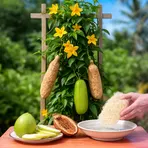
A tropical climbing plant with yellow flowers, edible young fruits, and dried inner fruit used as a sponge
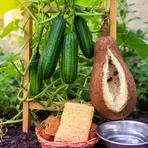
A climbing plant whose young fruits are edible and whose dried mature fruit makes a natural sponge

A climbing plant with large yellow flowers and edible young fruits that dry into natural sponges

A climbing tropical plant whose fruit becomes a dry fibrous sponge and whose young fruit is eaten

A plant fruit used as a natural bath sponge, like a loofah

A climbing plant that makes fruits with hard skins like bottle gourds
Surface Forms
Morphology
rag + gourd
The compound pairs 'rag' (a scrap of cloth) with 'gourd' (a vine fruit), so a B1 learner who knows both words can plausibly infer a gourd associated with rag-like or sponge-like use. However, the precise botanical sense — a specific gourd whose dried interior becomes a fibrous sponge (luffa) — is a specialised, culture-specific lexical item not fully predictable from the parts alone. This makes the expression partially transparent but requiring prior exposure for the exact meaning.
Etymology
The name rag gourd comes from the dry, stringy inside of the mature gourd. That inside becomes rough and can be used like a 'rag' or natural 'sponge' to 'scrub' dishes, so the name points to the plant's cleaning use.