
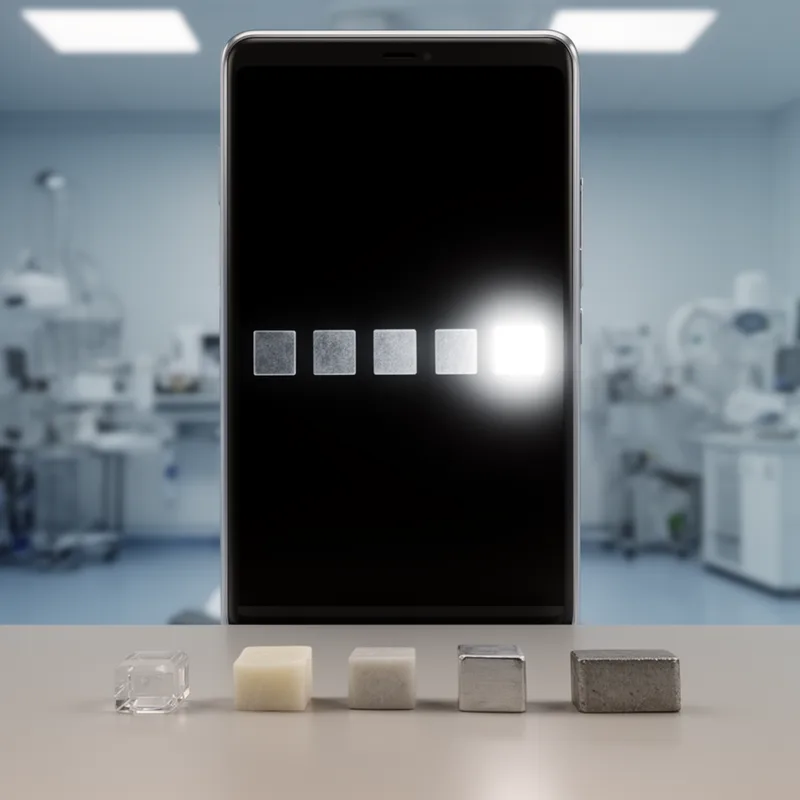
radiopacity
- noun
- /ˌreɪdiəʊˈpæsɪti/
- Specialized
 :
radiopacidad
:
radiopacidad
- In medical imaging, substances with high radiopacity appear white on X-rays, helping doctors identify various conditions.
Examples
-
Typical radiologic findings include a sharp demarcation between radiolucency and radiopacity.
Academic text (2006) -
We describe an interesting case of a sinonasal fungus ball that resembled dental filling material on radiologic imaging because of its extraordinary radiopacity.
Academic text (2004) -
The one on the right had a slight angle to it two-thirds along its length, associated with a slight increase in radiopacity.
Fiction book (1992) -
In our literature review, we did not find any studies on what constitutes the radiopacity of fungal masses in the sinuses.
Academic text (2004) -
It was radiolucent centrally, with a peripheral radiopacity due to calcium deposits around its margin.
Academic text (1996) -
In this article, we describe an interesting case of a sinonasal fungus ball that resembled dental filling material on radiologic imaging because of its extraordinary radiopacity.
Academic text (2004) -
The dentist noted the radiopacity of the patient's dental fillings on the X-ray scan.
-
The tumor showed significant radiopacity, indicating it was dense and likely to require further examination.
Synonyms

 4
7.0
4
7.0

How much light or other rays something does not let through

A material that stops X-rays so it can be seen on an X-ray

How much a material does not let light pass through
Antonyms
How Radiopaque
- Specialized

- Specialized
Surface Forms
Morphology
radiopacity = radiopaque (semi-transparent) = radi + opaque + ity
Formed by the adjective 'radiopaque' plus the nominalizing suffix '-ity'; the components are semantically clear but the combining form 'radi(o)-' and the medical technicality may be unfamiliar to learners.
Etymology
Radiopacity combines the part radio- meaning 'ray' and opacity meaning 'not letting light through'. So something with high radiopacity blocks X-ray 'rays' and shows up clearly on an X-ray image.