
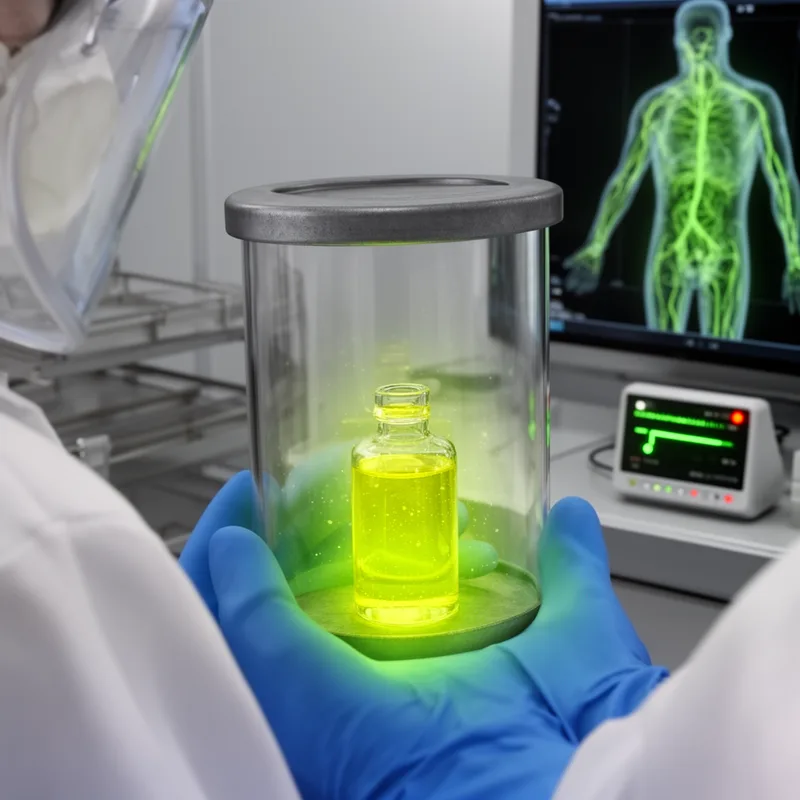
radiochlorine
- noun
- /ˌreɪdioʊˈklɔːriːn/
- Specialized
- Scientists use radiochlorine tracers to study how chlorine moves in biological systems.
Examples
-
The decay rate of radiochlorine must be carefully monitored during experiments.
-
Exposure to radiochlorine requires strict safety protocols in the laboratory.
-
The lab discovered a new type of radiochlorine.
-
Researchers are studying radiochlorines for medical applications.
-
Researchers often utilize radiochlorine isotopes in cancer treatments to track tumor progress.
-
The presence of radiochlorine in the sample indicated contamination in the laboratory.
-
Scientists rely on radiochlorine to trace chemical movements in ecological research.
Synonyms

 4
8.2

An atom that is unstable and gives off radiation
 2
8.6
An atom that gives off radiation and is used in medicine or science


 1
8.3
A drug that contains a small radioactive substance used to find or treat illness with medical scans
 1
6.6
A small radioactive substance doctors or scientists inject to show how parts of the body work

A chemical labeled with a radioactive atom used in research or medicine
Surface Forms
Morphology
Etymology
Radiochlorine joins radio- meaning 'ray' or 'radiation' and chlorine, the chemical whose name comes from a word for 'green', as in chlorophyll. So, radiochlorine means a form of chlorine that gives off radiation and is used as a radioactive version of the element in science and medicine.