

radio noise
 1
3.8
1
3.8

- noun
- /ˈreɪdioʊ nɔɪz/
- Specialized
- During the storm, we experienced a lot of radio noise on our favorite station.
Examples
-
On the backside of the Moon, a radio telescope would be shielded from all the radio noise that floods the terrestrial environment.
Academic text (1991) -
In 1963, Bell Labs assigned two of its physicists, Arno Penzias and Robert Wilson, to trace radio noise that was interfering with the development of communications satellites.
Academic text (1996) -
Radio noise, which is similar in nature to interfering speech, is likely to cause similar problems.
Academic text (1991) -
Jansky hoped to sort out the directions from which the radio noise interference was coming.
Academic text (1991) -
A lightning discharge will produce radio noise to which the Radio JOVE receiver is very sensitive.
Academic text (2004) -
A radio telescope on the far side of the Moon can "see" into deep space from the only platform in the Solar System that is permanently free from Earth's radio noise.
Blog text (1) -
Grote Reber began a hobby of studying galactic radio noise.
Academic text (1991) -
But before they finished, Arno Penzias and Robert Wilson detected some puzzling radio noise in their tests of microwave antennas at Bell Telephone Labs.
Academic text (1994) -
Reber not only confirmed Jansky's detection of radio noise from the direction of Sagittarius, he also discovered new sources in the constellations of Cygnus, Canis Major, and Cassiopeia.
Academic text (1991) -
The radio noise interfered with our ability to hear the music clearly.
Synonyms
 172
5.6
172
5.6
Extra sounds or information that hide the main message
 93
6.6
93
6.6
Unwanted signals that disturb or block radio and phone communication
 37
4.8
37
4.8
A crackling noise on radio or television caused by electrical interference
 11
3.5
11
3.5
Unwanted sounds that make it hard to hear or record something

 1
8.4
1
8.4
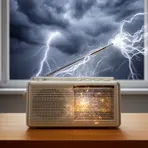
Crackling or hissing sounds on radios caused by electrical noise in the air
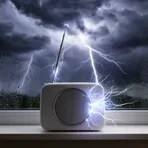
A crackling or hissing noise on a radio caused by electrical activity in the air

An unwanted sound that makes phone or audio signals hard to hear
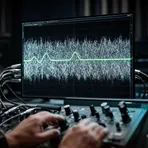
Unwanted background sound or electrical hiss that hides the true signal
How Noisy
- Specialized
93
6.6

- Specialized
1
3.8
37
4.8
- Specialized
11
3.5
Surface Forms
Morphology
The meaning 'unwanted static or interference present in a radio signal' is directly and compositionally derived from 'radio' (broadcast/broadcasting signal) + 'noise' (unwanted sound or interference). This simple noun–noun combination follows a transparent, cross-linguistically common pattern, so a B1 learner who knows both constituents will readily infer the MWE meaning.
Etymology
Radio noise comes from old radio sets that picked up a hissing, crackling sound from lightning, engines, or other electrical devices. So, the term now means the 'unwanted sound' or 'interference' in a radio signal.