

radio antenna
 3
3.2
3
3.2

- noun
- /ˈreɪdioʊ ænˈtɛnə/
- US
 :
antena de radio
:
antena de radio
- After the storm, they fixed the radio antenna on the roof to restore the radio signals.
- radio antenna on the roof
- ham radio antenna
- radio antenna array
And we have that of course in a standard radio antenna where the absorption is enhanced essentially around the residence peak.
- And we have that of course in a standard radio antenna where the absorption is enhanced essentially around the residence peak.
- We detect quasars with radio telescopes and radio antenna.
Examples
-
Lucky for us, this building has some of the most powerful radio antennas in the world.
-
As Barbara and I pull on parkas and boots, Frosty assembles the radio antenna.
Fiction book (1998) -
"On the roof of the mall is a very tall radio antenna.
Fiction book (2002) -
Using a radio antenna he had built, he discovered a source that recurred every 23 hours and 56 minutes.
Academic text (1996) -
John looks up at the stars, then down to the ham radio antenna on his roof, now looking raggedy from 29 years of neglect.
Fiction book (2000) -
And arrays of radio antenna like this one were built, one of which is in WA, that's the one shown here.
-
The parking lot glinted with mica chips, car hoods, and radio antennas.
Fiction book (1993) -
We see the snowmobiles are controlled by radio antennas, evidently homing in on his transmitter.
Fiction book (1997) -
The scientist adjusted the radio antenna to improve signal reception for the experiment.
-
The car came equipped with a retractable radio antenna for better reception while driving.
Synonyms
 110
6.6
110
6.6
A curved antenna that receives signals from satellites
 96
3.7
96
3.7
A metal device on a roof or car that sends and receives radio and TV signals
 10
5.1
10
5.1
A metal rod or wire that sends and gets radio and TV signals
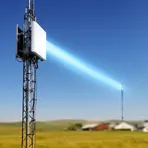 1
5.8
1
5.8
A device that sends or receives radio waves mostly in one direction
 1
4.1
1
4.1
A curved metal dish that directs radio or satellite signals to a single point

A long thin metal rod that picks up radio signals for a car or home radio
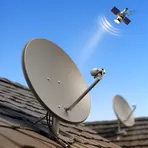
A curved metal dish that sends and receives signals from satellites

An antenna with two metal rods placed in a straight line with a connection in the middle

An antenna made from one metal rod placed above the ground to send and receive radio signals
How Directional
- Specialized
1
4.1

- Specialized
1
5.8
- US
3
3.2
- US
96
3.7
Surface Forms
Morphology
The meaning of 'radio antenna' is directly and compositionally derived from 'radio' (broadcasting electromagnetic waves) + 'antenna' (device for transmitting/receiving signals); a B1 learner who knows both words can infer it is an aerial/device for radio signals. This noun+noun composition is common cross-linguistically and follows standard English compounding patterns, so the phrase is immediately comprehensible from its parts.
Etymology
Radio antenna may come from the long feelers of insects, called antennae, because early metal rods and wires looked like thin feelers that reach out into the air. So a radio antenna is the long device that 'picks up' radio 'signals' for a receiver.