
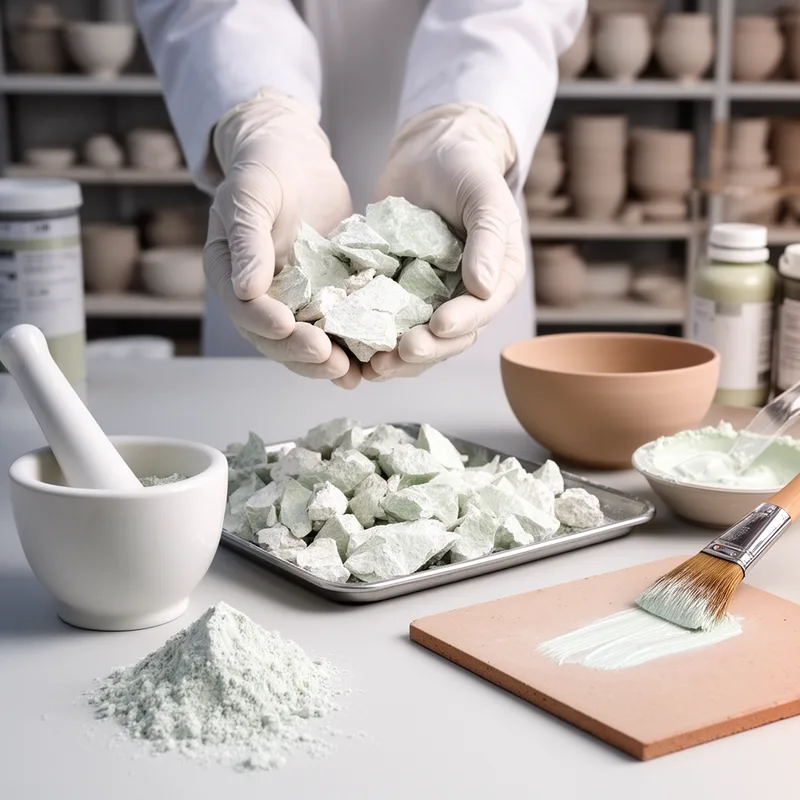
pyrophyllite
- noun
- /ˌpaɪrəˈfɪlaɪt/
- Specialized
- The artist used pyrophyllite for its smooth texture.
Examples
-
Many sculptors prefer pyrophyllite over other materials.
-
The ceramic industry often uses pyrophyllite as a raw material due to its thermal stability.
-
Geologists discovered a vein of pyrophyllite running through the ancient rock formation.
-
When ground into powder, pyrophyllite can serve as a filler in paints and plastics.
-
The ceramic industry often uses pyrophyllite as a raw material due to its thermal stability.
-
When ground into powder, pyrophyllite can serve as a filler in paints and plastics.
-
Geologists discovered a vein of pyrophyllite running through the ancient rock formation.
Surface Forms
Morphology
pyrophyllite = pyro + phyll + ite
Although the word contains classical elements meaning roughly 'fire' and 'leaf' plus the mineral suffix '-ite', that combination is not transparent to an average learner and does not directly reveal the mineral's meaning.
Etymology
Pyrophyllite comes from the Greek parts pyro- meaning 'fire' and phyllon meaning 'leaf'. The mineral breaks into thin, leaf-like layers and is often used in hot processes like making ceramics, so the name links its 'leaf' shape and its relation to heat.

