
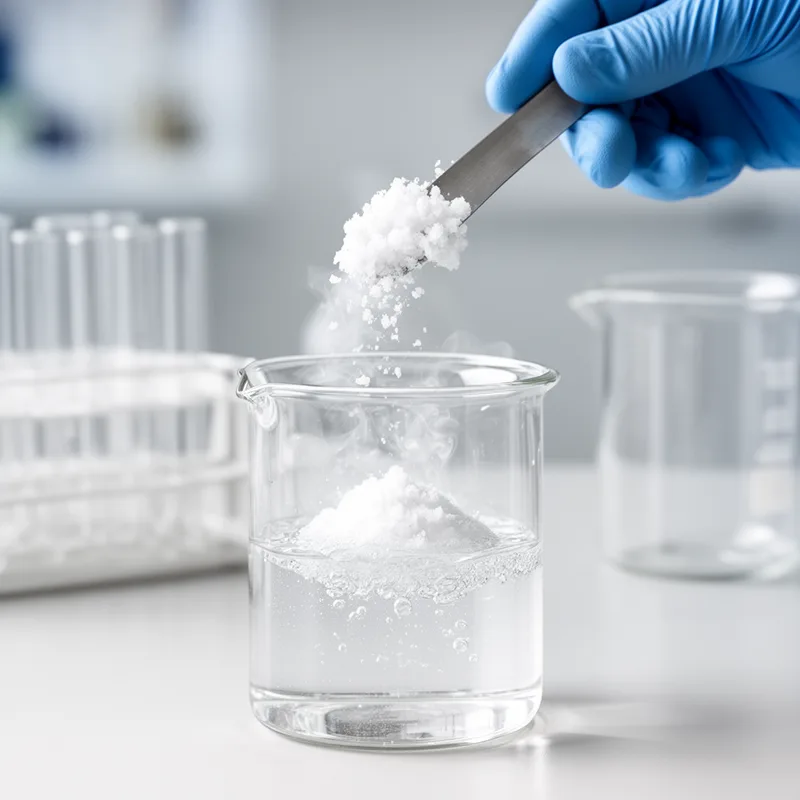
pyrophosphoric acid
- noun
- /ˌpaɪrəˈfɒsfərɪk ˈæsɪd/
- Specialized
- Pyrophosphoric acid is often produced by the dehydration of orthophosphoric acid at high temperatures.
Examples
-
Researchers used pyrophosphoric acid as a reagent in several analytical procedures.
-
Proper handling is required when working with pyrophosphoric acid due to its corrosive nature.
-
The laboratory uses pyrophosphoric acid for various experiments.
-
Can you explain what pyrophosphoric acid is?
-
Pyrophosphoric acid is often produced by heating orthophosphoric acid to remove water during chemical synthesis.
-
Due to its corrosive properties, safety precautions are essential when handling pyrophosphoric acid in the laboratory.
-
In many experiments, scientists utilize pyrophosphoric acid as a reagent for various reactions.
Surface Forms
Morphology
pyrophosphoric + acid
This is a highly specialized chemical term where the meaningful element is 'pyrophosphoric', which is not a common word and is not transparently decomposable to a B1 learner (it requires knowledge of technical morphemes like pyro- and phosphoric). Knowing the common word 'acid' alone does not allow a learner to derive the specific meaning or formation process, so the expression is not predictable from its parts for typical learners.
Etymology
Pyrophosphoric acid gets its name from pyro- meaning 'fire' or 'heat' and phosphoric meaning the phosphorus acid. It is formed by heating ordinary phosphoric acid, so the name literally points to 'phosphoric acid made by heat'.

