
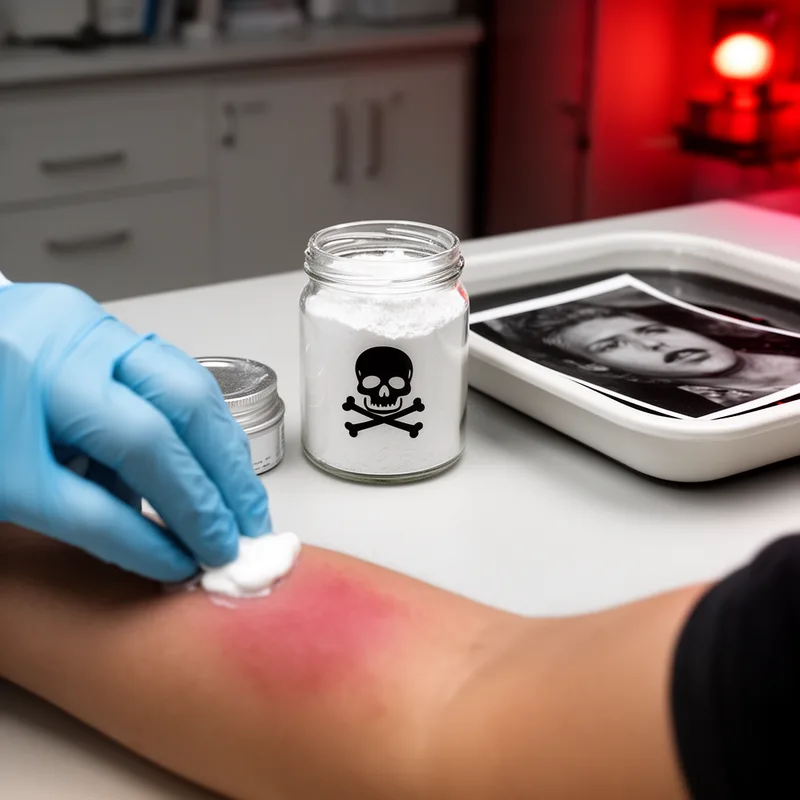
pyrogallic acid
- noun
- /ˌpaɪroʊˈɡælɪk ˈæsɪd/
- Specialized
- The dermatologist prescribed a mild concentration of pyrogallic acid cream for the patient’s psoriasis.
Examples
-
Early photographers often used pyrogallic acid as a developing agent for images.
-
Because of its toxicity, pyrogallic acid must be handled with care in laboratory settings.
-
The lab used pyrogallic acid to treat the skin condition.
-
Many photographers prefer pyrogallic acid for developing film.
-
Photographers in the 19th century relied on pyrogallic acid to develop their photographs.
-
To treat the severe skin disease, the doctor recommended a topical ointment containing pyrogallic acid.
-
In chemistry class, we learned that pyrogallic acid is used as a preservative and photographic developer.
Synonyms
A harmful white chemical used to treat some skin problems and to develop old photos
Surface Forms
Morphology
The compound is compositionally transparent: 'pyrogallic' means pertaining to pyrogallol and 'acid' denotes an acidic substance, so a learner who knows both constituents can infer it is an acid derived from pyrogallol. Chemical naming patterns like "X acid" are regular and cross-linguistically recognizable, so the technical specifics (toxicity, crystalline form, uses) are additional encyclopedic details rather than blocking basic comprehension.
Etymology
Pyrogallic acid gets its name from two old word parts: pyro means 'fire' and gallic comes from 'galls', small plant growths that were heated to make the original substance. So the name gives a simple image—something made by heat—and helps you remember it is a strong, sometimes toxic chemical once used by early photographers and in some skin treatments.

