
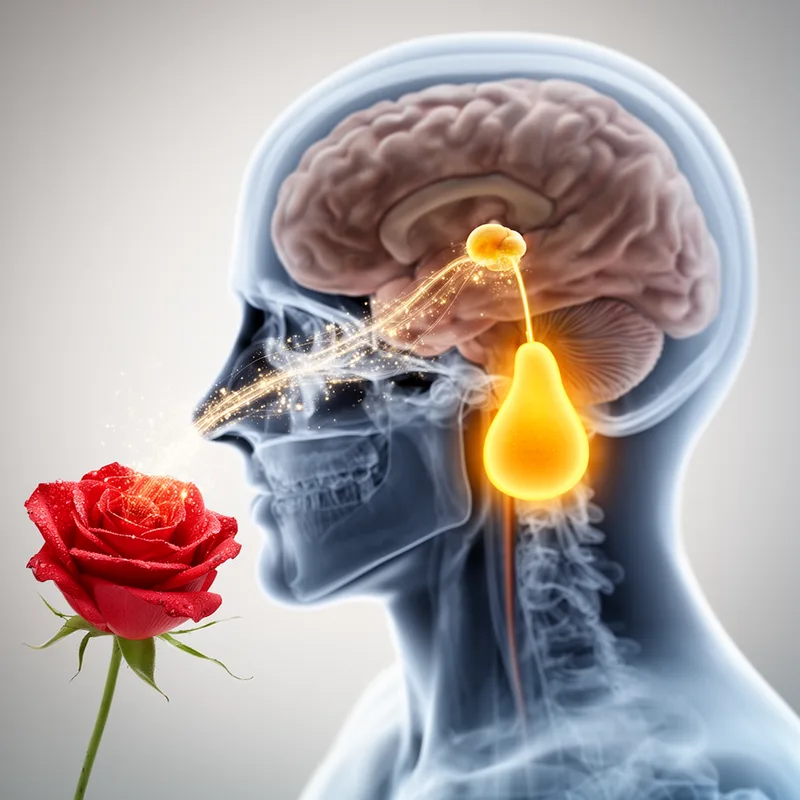
pyriform lobe
- noun
- /ˈpɪrɪfɔrm loʊb/
- Specialized
- Damage to the pyriform lobe can result in an impaired sense of smell.
Examples
-
The pyriform lobe plays a crucial role in our sense of smell.
-
Neuroscientists are studying the function of the pyriform lobe in olfactory perception.
-
The pyriform lobe is located in the lower part of the cerebral hemisphere.
-
Each pyriform lobe is located on either side of the brain.
-
The pyriform lobe is critical for processing scents and odors from the environment.
-
Damage to the pyriform lobe can lead to difficulties in identifying different smells.
-
Research has shown that the pyriform lobe is involved in emotional responses to particular scents.
Synonyms

A pear-shaped part of the brain on each side that helps process smells

A pear-shaped part of the brain that helps you smell

A pear-shaped part of the brain that processes smells
Surface Forms
Morphology
The term directly combines 'pyriform' (pear-shaped) with 'lobe' (a projecting part), so a learner who knows both constituents can infer it denotes a pear-shaped anatomical portion. However, the specific identification as a brain region involved in olfaction (rhinencephalon) and its technical medical sense are specialized and not fully predictable from the parts, making the expression only partly transparent to a B1 learner.
Etymology
Pyriform lobe gets its name from a simple picture: pyriform means 'pear-shaped' and lobe means a part of the brain. It sits near the nose and helps the 'sense of smell', so the name shows it is a pear-shaped brain area used for smelling.

