
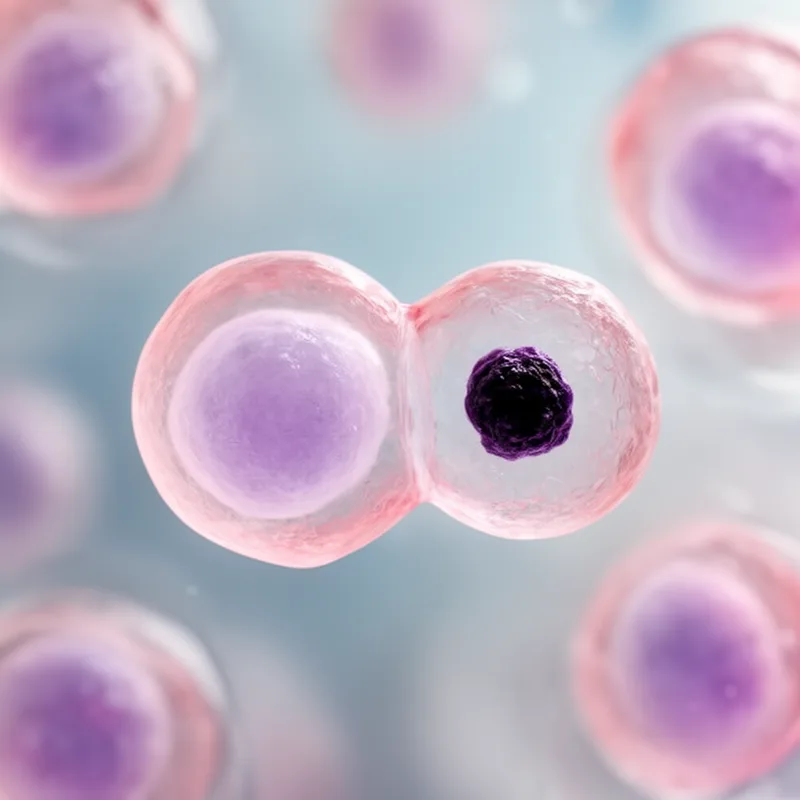
pyknosis


 1
9.9
- noun
- /pɪkˈnoʊsɪs/
- Specialized
- Pathologists observe pyknosis under the microscope when examining samples of dying tissues.
Examples
-
During the cellular degeneration process, nuclear pyknosis can lead to a significant reduction in cell size.
-
In the acute phase, the epidermis is characterized by dyskeratotic cells, exocytosis, edema, nuclear pyknosis, and hydropic degeneration of basal cells.
Academic text (2007) -
The presence of pyknosis in tumor cells indicates a progression towards cancerous cell death.
Synonyms
A cell's nucleus becomes small and very dark when the cell dies
How Degenerated
- Specialized

- Specialized
1
9.9
Surface Forms
Morphology
pyknosis = pykn + osis
Although the word is historically analyzable as a Greek root plus the medical suffix '-osis', the bound root 'pykn' is not a recognizable English base for most learners and the specific medical sense is not inferable by standard English morphology.
Etymology
Pyknosis comes from the Greek word pyknos, meaning 'thick' or 'dense', and the ending -osis, meaning 'a condition'. So pyknosis is the condition when a cell's nucleus becomes very dense and shrinks as the cell dies.