
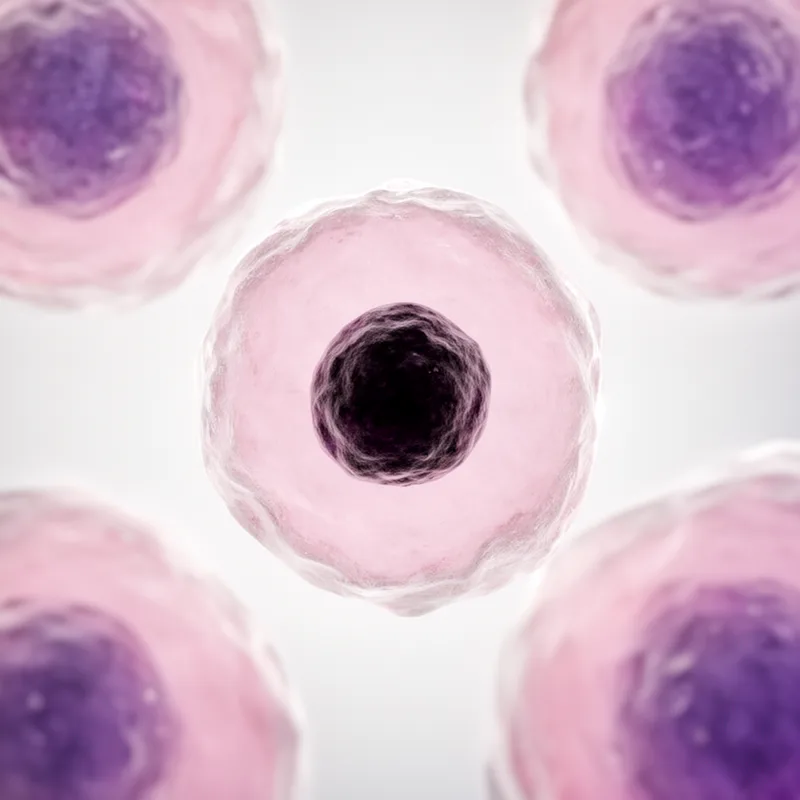
pycnosis
- noun
- /pɪkˈnoʊsɪs/
- Specialized
- Under the microscope, the presence of pycnosis in cells indicates advanced tissue degeneration.
Examples
-
Biopsy reports noted widespread pycnosis among neurons in the affected brain region.
-
In apoptosis, pycnosis often marks the irreversible stage of nuclear condensation.
-
The pathologist observed pycnosis in the cancerous cells.
-
During the examination, signs of pycnosis were evident.
-
The pathologist noted extensive pycnosis, indicating cell death in the tumor sample.
-
In histopathology, pycnosis is a key indicator of necrosis in diseased tissues.
-
The researcher observed pycnosis in the cultured cells after exposure to toxic substances.
Synonyms



 1
9.9
A cell nucleus that becomes smaller and darker when the cell dies
Surface Forms
Morphology
pycnosis = pycno (opaque) = pycno + osis
The combining form 'pycno-' is a specialized medical form (meaning 'dense' or 'thick') and is not a productive, standalone English base that learners will recognise, so the meaning of 'pycnosis' is not transparent to average learners.
Etymology
Pycnosis comes from the Greek root pyknos, which means 'dense' or 'thick'. So, pycnosis describes a cell nucleus that has become shrunken and tightly packed, and that 'dense' look is why doctors use the word for this stage of cell death.