
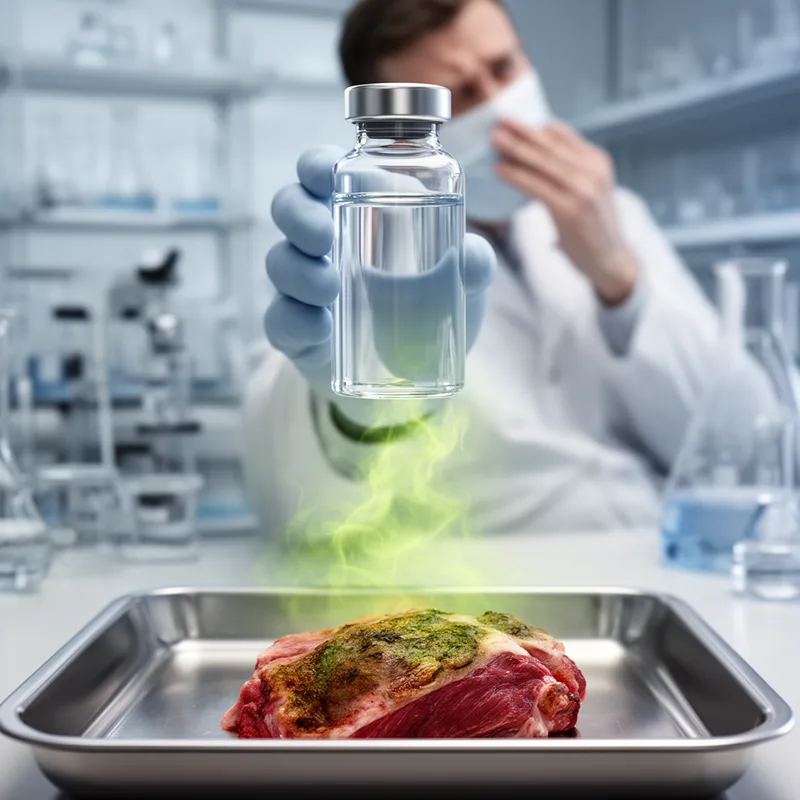
putrescine
 1
9.9

- noun
- /ˈpjuːtrəˌsiːn/
- Specialized
- Taking all this into account, how can someone conclude that it is "likely not possible" that the release of heavy amines like putrescine and cadaverine would not have been sufficient in the case of the man of the Shroud in order to start the Maillard reaction as proposed by Rogers?
Examples
-
Jipi pokes at the controls some more and finally brings up an overlay labeled PUTRESCINE (SMELL OF DEATH).
Fiction book (1997) -
Complaints of "dead body" odors suggested the presence of compounds such as cadaverine and putrescine.
Academic text (2001) -
Consequently, in this context of "abnormality," how can we be so sure that a tortured and crucified corpse like the man of the Shroud would have released the same amount of heavy amines like putrescine and cadaverine as a "normal" corpse during the first 36-72 hours after death?
Blog text (24) -
During the decomposition process, putrescine is often released, contributing to the foul smell of rotting flesh.
-
The presence of putrescine in the air signaled that a dead animal was nearby, as it is produced during decay.
-
Scientists often measure the levels of putrescine in soil to assess animal decomposition in forensic investigations.
Synonyms
 2
9.9
A poison made when food or meat goes bad that causes food poisoning

Bacteria make a toxic chemical when animal or plant parts break down
Surface Forms
Etymology
Putrescine comes from the Latin verb putrescere, meaning 'to rot', plus the chemical ending -ine. So putrescine is a chemical that forms when animal tissue decays, which explains its foul smell.