
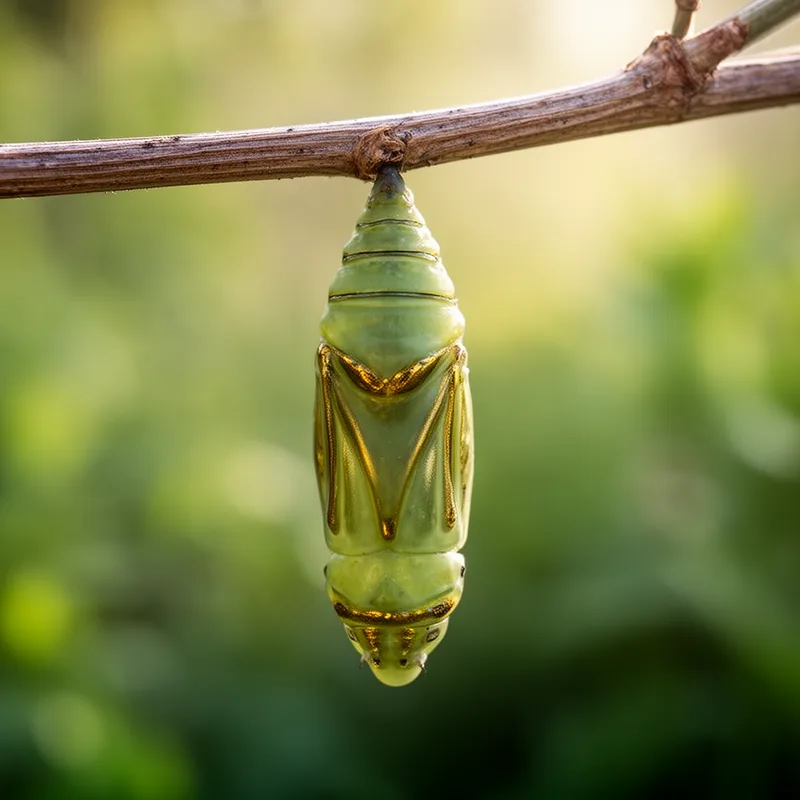
pupa
 7
6.7
7
6.7

- noun
- /ˈpjuːpə/
- Specialized
- In nature, many insects spend a period as a pupa before emerging as fully formed adults.
- pupae of flies
- larvae and pupae
- pupae of moths
Loading YouTube…
Watch on YouTubeThis Organism is very clearly a more mature pupa.
- This Organism is very clearly a more mature pupa.
Examples
-
Adult flies emerge from their pupae exclusively in the early morning.
Academic text (2005) -
If they do not have sufficient time to develop fully, they hibernate as older caterpillars or pupae through a second winter.
Academic text (2011) -
It's about to enter the pupa stage.
-
We are in the cocoon pupa stage at this moment.
-
- They're in the pupa stage.
-
And they found within that fly a pupa of a parasitoid like egg.
-
The larvae then change into pupae and emerge as adults in two or three days.
Academic text (1992) -
Mosquitoes must pass through four larval stages, change into pupae, and then emerge as adults before they can leave the pools.
Academic text (1992) -
Research entomologist Franck Herard found the pupae on oak trees in Germany.
Academic text (1994) -
Available commercially, Muscidifurax raptor is a parasitic wasp that preys on flies, laying its eggs in the pupae.
Academic text (1994)
Synonyms
 12
8.1
12
8.1
A hard case in which a caterpillar turns into a butterfly or moth
Antonyms
How Developed

Surface Forms
Etymology
The word pupa comes from Latin pupa, which means 'doll' and is the same root as the English word puppet. Think of a pupa as a 'doll' that rests quietly in a cocoon while it slowly changes into an adult insect, so the name explains this inactive, changing stage.