

pulasan tree
- noun
- Philippine
- Many farmers prefer the pulasan tree because its fruit tastes sweeter than rambutan.
Examples
-
The pulasan tree thrives in the humid lowlands of Malaysia and Indonesia.
-
A mature pulasan tree can yield hundreds of fruits each season.
-
The pulasan tree is native to Southeast Asia.
-
Many farmers cultivate the pulasan tree for its sweet fruit.
-
A mature pulasan tree can yield hundreds of fruits each season.
-
Many farmers prefer the pulasan tree because its fruit tastes sweeter than rambutan.
-
The pulasan tree thrives in the humid lowlands of Malaysia and Indonesia.
Synonyms

A Southeast Asian tree that makes a sweet fruit like a rambutan
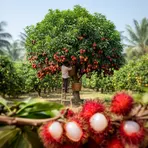
A tropical tree that makes a sweet fruit like a rambutan
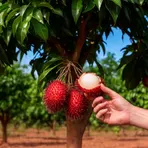
A tropical tree that grows sweet red fruit like a rambutan
Surface Forms
Morphology
The meaning is directly compositional: 'pulasan' denotes a particular fruit/tree species and 'tree' specifies it is a tree, so a learner who knows both words can deduce it refers to the pulasan plant. This noun+noun species-labeling pattern is common cross-linguistically, making the phrase immediately understandable to a B1 learner.
Etymology
Pulasan tree comes from a Malay word 'pulas' meaning 'to twist'. People open the fruit by twisting and pulling the skin, so the word for 'twist' became the name of the tree and its fruit.

