
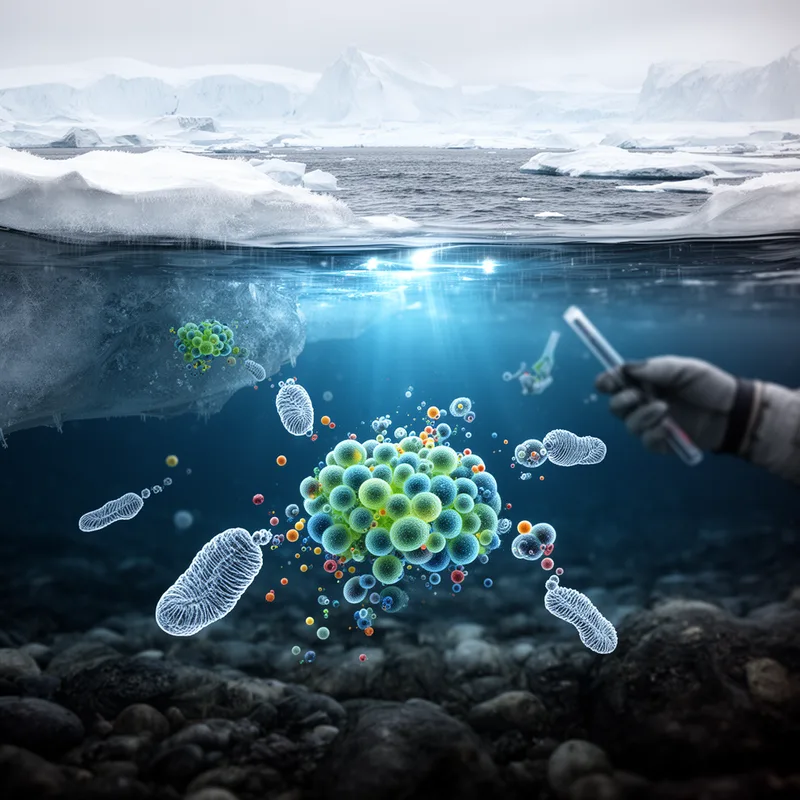
psychrophilic


 1
9.9
- adjective
- /saɪˈkroʊfɪlɪk/
- Specialized
- Psychrophilic bacteria such as Polaromonas vacuolata are found in Antarctic sea ice and grow optimally at 4 degrees Celsius.
- psychrophilic bacteria
Examples
-
Many psychrophilic organisms can be found in glacial ice and remain active at temperatures close to 0 degrees Celsius.
-
Researchers study psychrophilic enzymes to understand how they function effectively in extremely cold conditions.
-
The organisms of interest are psychrophilic and thermophilic bacteria and archaea, single-celled organisms that fall between the bacteria and eukaryotes.
Academic text (1994) -
But, because many psychrophilic, barophilic bacteria have been found to be closely related to shallow-water bacteria found in various lineages, for them, at least, "it appears that adaptation to high pressure is a relatively recent evolutionary twist," says Bartlett.
Academic text (1994) -
Psychrophilic bacteria such as Psychrobacter cryohalolentis thrive in environments where temperatures are below freezing.
Antonyms
How Cold-Loving

Surface Forms
Morphology
psychrophilic = psychro + phil + ic
Although the word is built from specialized Greek-based elements meaning 'cold' and 'loving', an average learner is unlikely to recover the technical meaning from these forms alone.
Etymology
Psychrophilic comes from Greek parts: psychro- meaning 'cold' and -philic meaning 'loving', the same -philic you see in hydrophilic ('water-loving'). So a psychrophilic organism 'loves' cold and grows best at very low temperatures.