
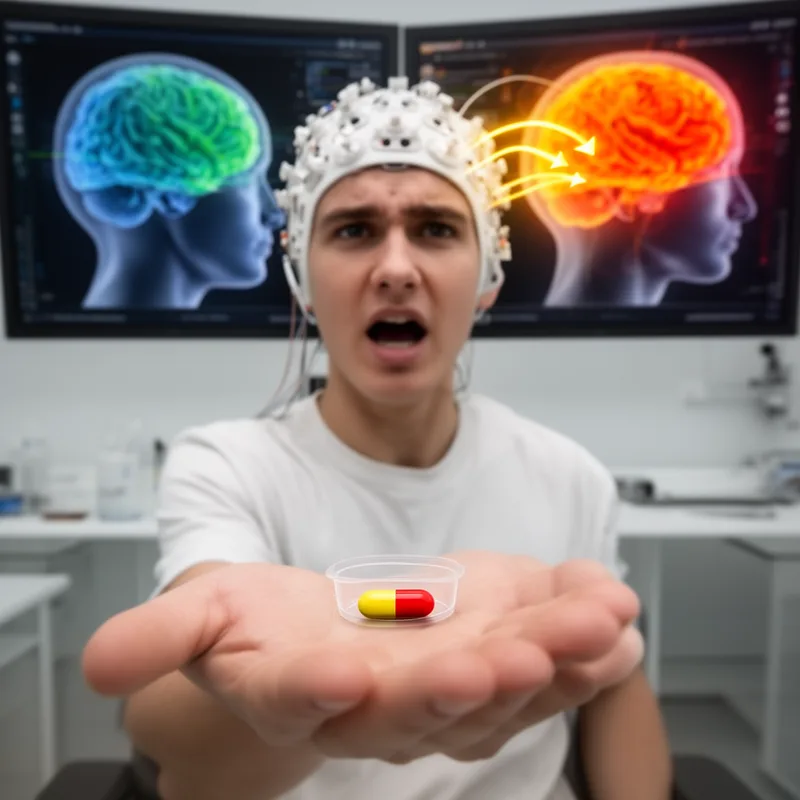
psychoactive substance


 1
6.0
1
6.0
- noun
- /ˌsaɪkoʊˈæktɪv ˈsʌbstəns/
- Specialized
- The present regulatory classifications used by the Drug Enforcement Administration appear to portray the health risks of several psychoactive substances in a manner that is incompatible with psychopharmacological evidence (Gable 1992).
- psychoactive substances consumption
- psychoactive substances use
- other psychoactive substances
Loading YouTube…
Watch on YouTubeThat's the the L theanine in the tea with the caffeine with the other psychoactive substances.
- That's the the L theanine in the tea with the caffeine with the other psychoactive substances.
- I wish we know DMT that methotreptamine is the supposedly psychoactive substance.
- And so I wanted to present a more realistic view of the psychoactive substance user.
Examples
-
Caffeine is the most commonly consumed psychoactive substance worldwide and an active ingredient in innumerable foods and beverages.
Blog text (25) -
Ambiguity about the role of alcohol as a social beverage or as a psychoactive substance to be managed was identified.
Academic text (2002) -
And you mentioned psychoactive substances earlier.
-
Neither hallucinogens nor psychoactive substances are used in the treatment.
Blog text (16) -
A 55-year-old male patient with a history of various psychoactive substance abuse.
Academic text (2018) -
Since the 1960s, the measurement of psychoactive substance use in the United States has expanded extensively.
Academic text (2009) -
Psychoactive substance consumption is not associated with coping but is associated with having fun with friends.
Academic text (2013) -
And this vine contains harmine, which is a psychoactive substance in itself.
-
Participants represented a wide range of lifetime experiences with pharmaceutical opioids and other psychoactive substances (Table 1).
Academic text (2006) -
Caffeine is the most commonly consumed psychoactive substance worldwide and an active ingredient in innumerable foods and beverages.
Synonyms
 3
4.8
3
4.8
A drug that changes how a person thinks, feels, or sees things
 2
4.4
2
4.4
Something that changes how the mind works and so changes mood, behaviour and what you notice
 1
7.7
1
7.7
A drug that changes how you feel, think, or see things
 1
7.8
1
7.8
A chemical that changes a person's mood or thoughts
Antonyms

How Psychoactive
- NSFW
1
7.9

- Specialized
1
6.0
- Specialized
61
6.0
- Specialized
Surface Forms
Morphology
The meaning is fully compositional: 'psychoactive' (affecting mental functions) directly modifies 'substance' (a kind of matter), so the phrase denotes a substance that alters mood, perception, or behavior. There is no idiomatic or metaphorical shift, and similar adjective+noun constructions exist across languages, making it readily understandable to learners who know both constituents.
Etymology
Psychoactive substance comes from the parts psycho and active. Psycho points to the 'mind' and active means 'acts on', so the phrase names a substance that acts on the mind and changes mood, the way we see things, or behavior.