
pseudotuberculosis
- noun
- /ˌsuːdoʊtjuːbərˈkɜːləsɪs/
- Specialized
- Misdiagnoses of C. ulcerans isolates as C. pseudotuberculosis in the past because of similar pathology and similar phenotype cannot be excluded.
- pseudotuberculosis; Cul, C. ulcerans
- C. pseudotuberculosis
Examples
-
As also shown in this study, biochemical differentiation between C. ulcerans and C. pseudotuberculosis might be problematic, and basic conventional tests may not properly discriminate between the two species (3).
Academic text (2014) -
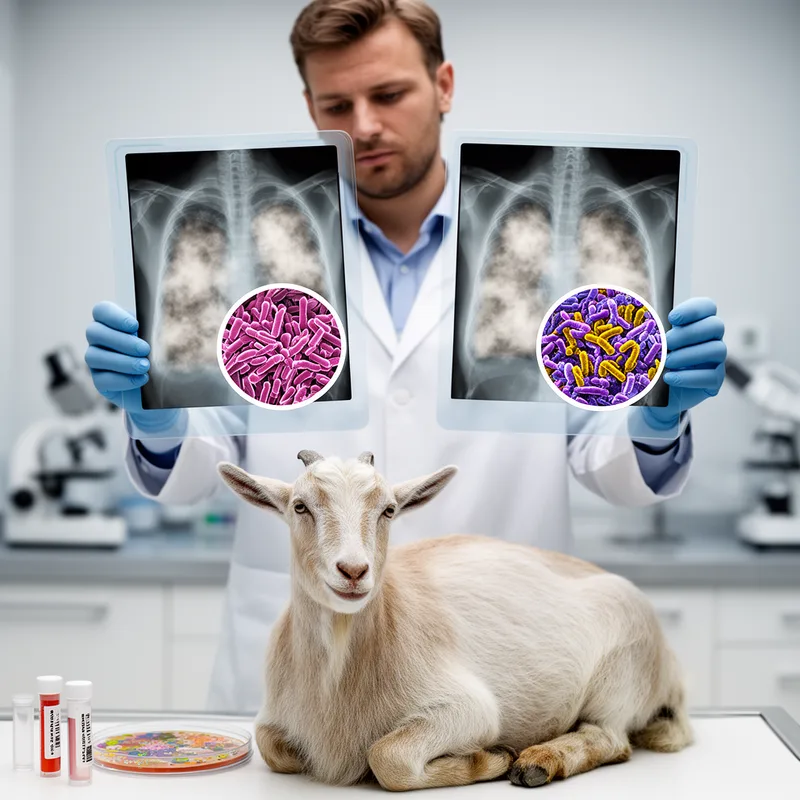
Veterinarians often encounter pseudotuberculosis in livestock, where it can cause severe health issues.
-
The Corynebacterium species C. diphtheriae, C. ulcerans, and C. pseudotuberculosis form the C. diphtheriae group, as shown by 16S rRNA gene sequence analysis (1).
Academic text (2014) -
Figure 2. Pseudotuberculosis-like caseous abscesses caused by Corynebacterium ulcerans in wild boar S28/3/13. Scale is shown in millimeters.
Academic text (2014) -
The comparison of the IR spectra of the 13 strains from game animals with a collection of reference strains showed a clear separation in two main branches for the two species C. pseudotuberculosis and C. ulcerans (Figure 1).
Academic text (2014) -
By using the standardized systems API Coryne and VITEK2-compact for coryneform bacteria, erroneous identification was made of most isolates (10 and 11 cases, respectively) from game animals as C. pseudotuberculosis.
Academic text (2014) -
Moreover, C. ulcerans and C. pseudotuberculosis may produce phospholipase D, the major virulence factor involved in caseous lymphadenitis, which is a disease that mainly affects sheep, goats, and horses (3).
Academic text (2014) -
The spread of pseudotuberculosis among domestic animals can lead to significant economic losses in agriculture.
-
Understanding the symptoms of pseudotuberculosis is crucial for timely diagnosis and treatment in both animals and humans.
How Similar
- Specialized
 50
3.7
50
3.7


- Specialized
Surface Forms
Morphology
pseudotuberculosis = tuberculosis (semi-transparent) = pseudo + tuberculosis
The word is built transparently from pseudo- plus tuberculosis, but the meaning is a specialized medical label rather than a fully everyday composition.
Etymology
The word pseudotuberculosis comes from pseudo- meaning 'false' and tuberculosis, the name of the disease. So, it literally means 'false tuberculosis', an infection that looks like tuberculosis but is caused by different bacteria.