
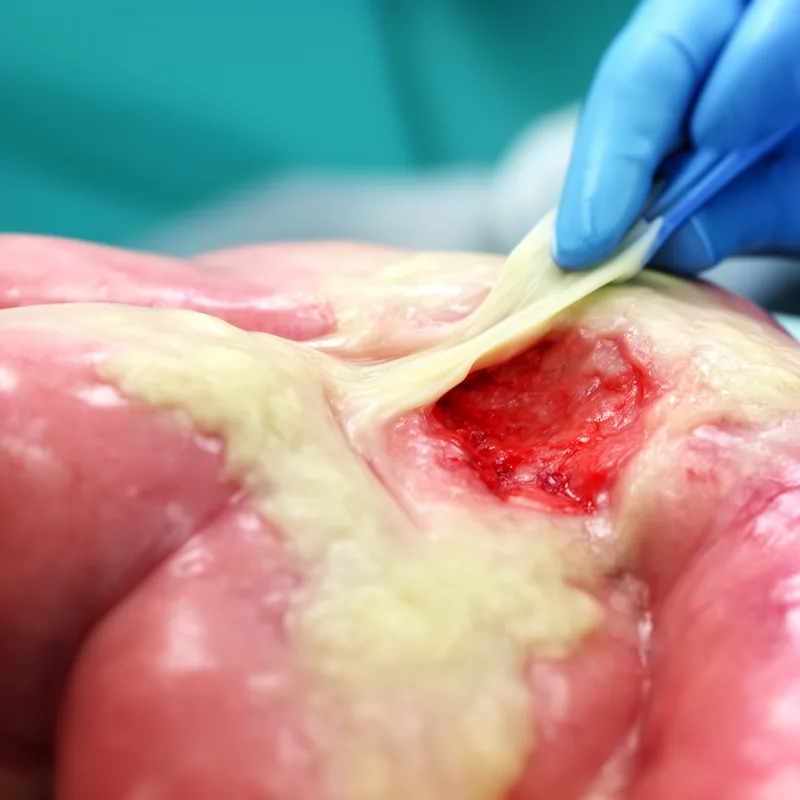
pseudomembranous


 1
9.9
- adjective
- /ˌsuːdoʊˈmɛmbrənəs/
- Specialized
- Approximately 10% of those with these complaints develop pseudomembranous colitis, which is caused by enterotoxin-producing Clostridium difficile.
Examples
-
Reports early in the AIDS epidemic suggested a frequent concurrence of pseudomembranous oral candidosis and oesophageal candidosis, an AIDS diagnosis.
Academic text (2000) -
In cases of pseudomembranous colitis, patients often experience severe diarrhea and abdominal pain.
-
This type is easily missed, but it is just as important a marker of the progression of HIV infection as the more obvious pseudomembranous form.
Academic text (2000) -
The biopsy revealed pseudomembranous tissue, indicating that the patient had likely contracted an infection.
-
Doctors found pseudomembranous lesions in the patient's throat, which were symptomatic of a fungal infection.
Surface Forms
Morphology
pseudomembranous = membranous (transparent) = pseudo + membran + ous
The word is formed by adding pseudo- to membranous, giving the clear sense of 'false membrane-like'.
Etymology
Pseudomembranous breaks into pseudo- meaning 'false' and membrane meaning 'a thin layer or skin'. So, pseudomembranous describes tissue that has a 'false' membrane — a layer that looks like a real covering but is not, often forming because of infection.