
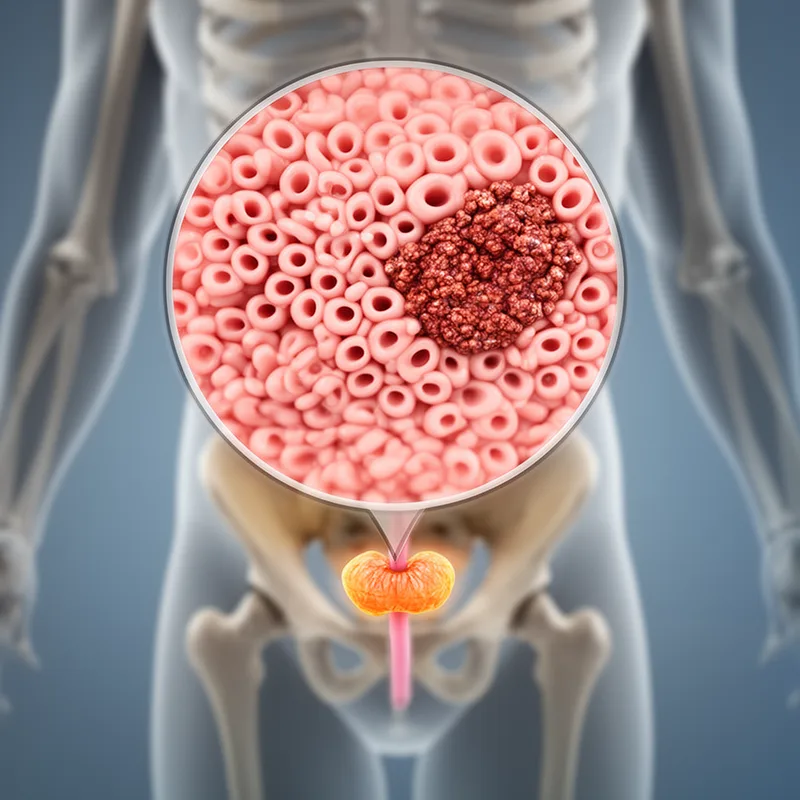
prostatic adenocarcinoma
- noun
- /prəˈstætɪk ˌædɪnoʊˈkɑːrsɪˌnoʊmə/
- Specialized
- Symptoms of prostatic adenocarcinoma may include difficulty urinating or pelvic pain.
Examples
-
Radical prostatectomy is one treatment for organ-confined prostatic adenocarcinoma.
Academic text (1995) -
14 consecutive patients with documented organ-confined prostatic adenocarcinoma were analyzed (Table 1).
Academic text (1995) -
Many men diagnosed with prostatic adenocarcinoma undergo a radical prostatectomy as part of their treatment.
-
Regular screenings can help detect prostatic adenocarcinoma in its early stages.
Synonyms

 57
2.2
57
2.2

A disease in the prostate where cells grow too much and make a harmful lump
Surface Forms
Morphology
The term is a compositional medical compound: 'prostatic' locates the condition in the prostate and 'adenocarcinoma' names a glandular cancer, so a learner who knows both words can infer "a glandular cancer of the prostate." The meaning follows regular morphological composition common in medical terminology (and mirrored across many languages), making the overall sense directly derivable from the parts.
Etymology
Prostatic adenocarcinoma is a medical name made from word parts: prostatic means 'from the prostate', the small male gland, adeno means 'gland', and carcinoma means 'a cancerous tumor'. So the name may come from these parts and simply means 'a cancer that starts in the prostate gland'.