

prosciutto di Parma
- noun
- /prəˈʃuːtoʊ di ˈpɑːrmə/
- I love prosciutto di Parma on my sandwiches.
Examples
-
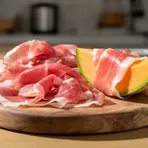
The chef recommended a platter featuring prosciutto di Parma with melon as a starter.
-
He appreciated the delicate sweetness of the prosciutto di Parma in his sandwich.
-
Authentic prosciutto di Parma must be aged for at least twelve months by law.
-
Have you tried prosciutto di Parma with melon?
-
The chef served a delicious platter featuring prosciutto di Parma, which was paired perfectly with fresh melon.
-
For my sandwich, I chose to add some prosciutto di Parma because of its rich, savory flavor.
-
At the Italian restaurant, I ordered a salad topped with thin slices of prosciutto di Parma for an extra touch of delicacy.
Synonyms
 19
7.9
19
7.9

Thin slices of dry Italian ham served uncooked
Surface Forms
Morphology
prosciutto + di + Parma
The phrase literally composes as 'prosciutto' (Italian ham) + 'di' (of) + 'Parma' (a city), so its meaning 'ham from Parma' is directly inferable from the constituents. This place‑of‑origin construction is cross‑linguistically common, so a B1 learner who knows the component words would understand it as the dry‑cured ham produced in Parma.
Etymology
Prosciutto di Parma comes from Italian: prosciutto means 'ham' and Parma is the region where the ham is made. For a long time people salted and hung the meat to dry in Parma's air, so today the name means 'the special salted and dried ham made in Parma' and only hams made there can use the name.