
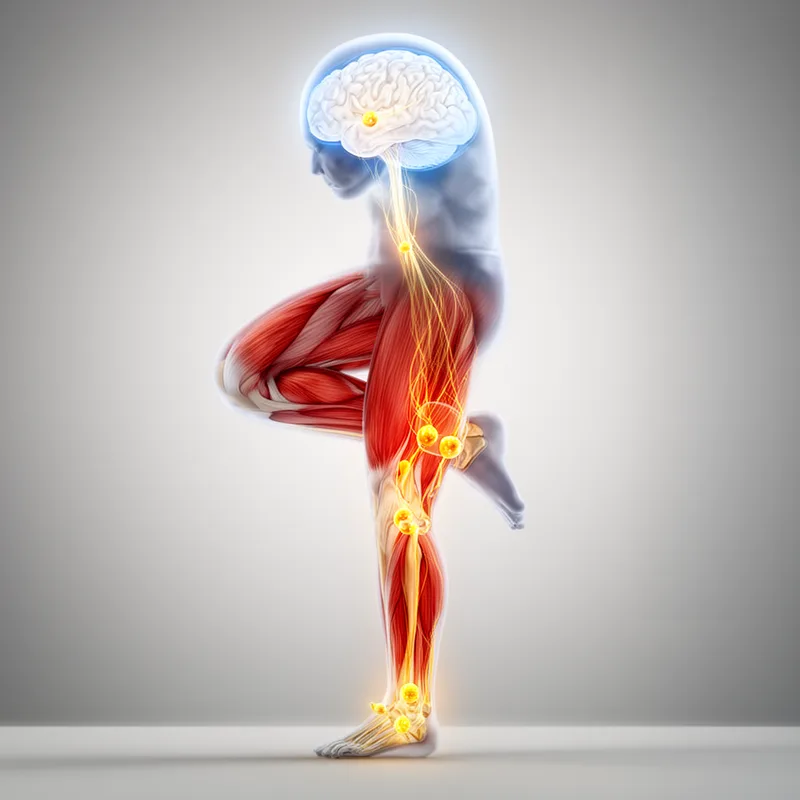
proprioceptor


 1
9.9
- noun
- /ˌproʊpriəˈsɛptər/
- Specialized
- Imagine yourself, a newly emerged living being, physically full-grown, eyes seeing, nose smelling, skin feeling, proprioceptors checking positions of head, limbs, torso, fingers.
Examples
-
The assumption is that as learners are guided through the movement, the proprioceptors associated with the movement will be activated and will provide the learners with correct cues.
Academic text (2000) -
Proprioception is the term applied to the data the brain receives from proprioceptors, which give the brain feedback about the position of the body.
Academic text (2012) -
"Just my proprioceptors.
Fiction book (1999) -
The athletes in these sports perform based primarily on their own sense of internal receptors or proprioceptors (body information).
Academic text (2008) -
The proprioceptors in your muscles help you understand where your body is positioned without looking.
-
When you close your eyes and touch your nose, your proprioceptors guide your movements accurately.
-
The dancer's proprioceptors allow her to perform complex movements gracefully, sensing her body in space.
Synonyms
 67
6.1
A part of the body like a cell that receives chemical or nerve signals and reacts
 1
5.8
A body part that senses touch, light, or sound and sends signals to the brain
 1
7.8
A cell in the body that senses touch and pressure
Surface Forms
Morphology
proprioceptor = receptor (semi-transparent) = proprio + ceptor
The form is formed by adding the specialized combining form 'proprio-' to the notion of a 'receptor', but 'proprio-' is technical and not obvious to general learners.
Etymology
Proprioceptor comes from Latin parts proprio- meaning 'one's own', like proper, and -ceptor meaning 'to receive'. So a proprioceptor is a small 'receiver' in your muscles and tendons that tells you about your own body's position and movement.