
propenoic acid
- noun
- /proʊˈpiːnoʊɪk ˈæsɪd/
- Specialized
 :
ácido propenoico
:
ácido propenoico
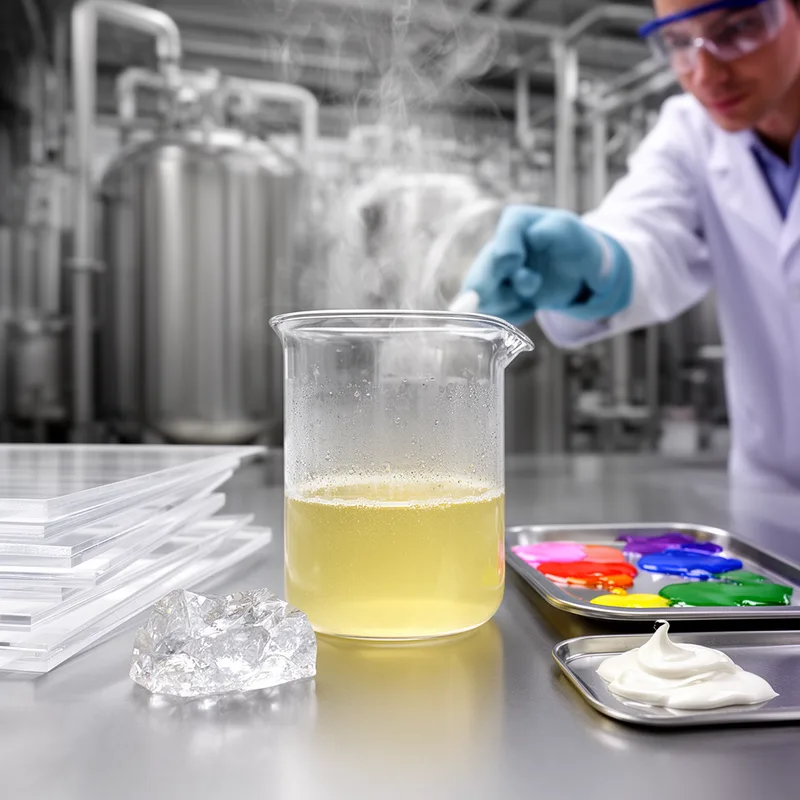
- Propenoic acid is widely used in the synthesis of polymers for paints and adhesives.
Examples
-
The chemical plant increased its capacity to produce propenoic acid for the plastics industry.
-
Exposure to propenoic acid should be minimized due to its irritating properties.
-
The chemical formula for propenoic acid is C3H4O2.
-
Many industries use propenoic acid to produce polymers.
-
Propenoic acid is commonly utilized in the manufacturing of acrylic plastics and resins.
-
In the production process, propenoic acid serves as a key raw material for various coatings.
-
Safety precautions are essential when handling propenoic acid due to its potential irritants.
Synonyms

A clear strong-smelling liquid used to make many plastics and paints
Surface Forms
Morphology
propenoic + acid
While 'acid' is a common and transparent word, 'propenoic' is a specialized chemical adjective formed by systematic organic-nomenclature morphology (relating to propene/acrylic) that a B1 learner would not recognize or decompose. The meaning therefore depends on domain-specific knowledge rather than ordinary constituent meanings, so the phrase is not derivable by typical learners.
Etymology
Propenoic acid is a chemical name that describes the molecule: prop- means three carbon atoms, -en- shows a double bond, and -oic acid marks the acid end. So the name gives a simple picture of a small three-carbon molecule with a double bond and an acid group, which is the same substance often called 'acrylic acid' and used to make plastics.

