
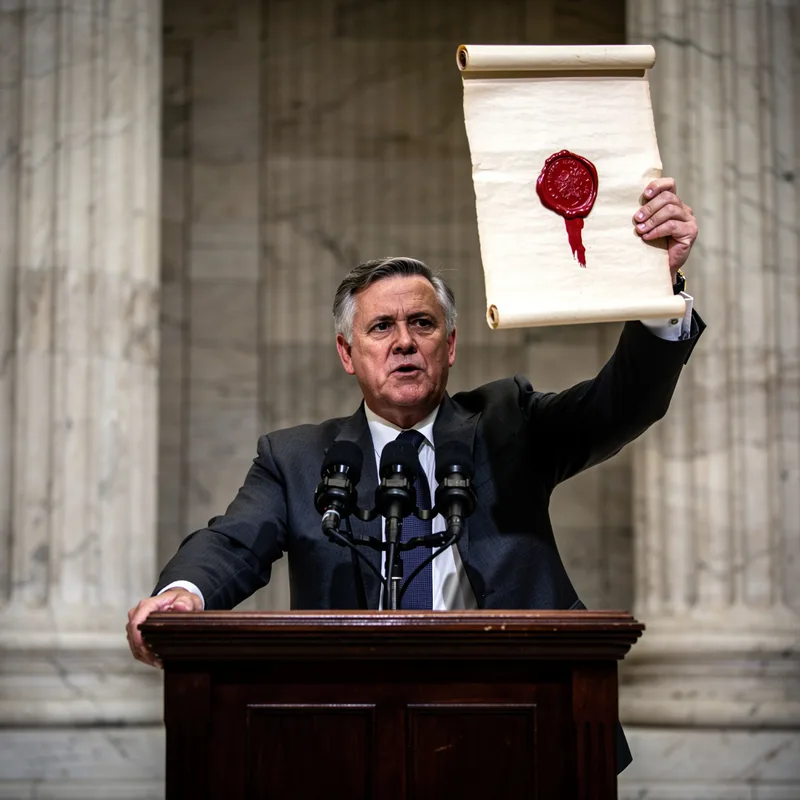
to promulgate
 24
8.0
24
8.0

- verb
- /ˈprɒməlɡeɪt/
- Formal
- In an official ceremony, the mayor will promulgate the new city ordinances this Friday.
- promulgate regulations
- promulgate laws
- promulgate decrees
Loading YouTube…
Watch on YouTubeYou know, how do we, how do we promulgate this in a way that we can actually provoke change?
- You know, how do we, how do we promulgate this in a way that we can actually provoke change?
- They had their skull arcs, the people who were in charge of, you know, promulgating the teachings and then running the school.
- The people in power, whether this is central bank shareholders or politicians or whoever, have rules that they promulgate and impose on the citizenry.
- So I maintain in mastery that there is another way of looking at your life, a much different approach, one that I obviously promulgate.
Examples
-
Further, presidents may use their office to promulgate decrees when legislative consent is not forthcoming.
Academic text (1991) -
However, through his support, Wilson allowed the declaration to be promulgated as policy.
Academic text (1990) -
To date, three other states have promulgated their own notice laws.
Academic text (2017) -
Thus, whenever a trade action is being promulgated in the United States, Canada is always included.
Academic text (1991) -
When you accomplish that, I will promulgate an order making you Brigadier General.
-
And I am also indicating that I will promulgate such rules, orders and regulations as I deem necessary to protect life and property.
-
Britain's request was denied, and China will promulgate the Basic Law in March 1990 as scheduled.
Academic text (1990) -
However, the proposed change to the GSAM was never promulgated as a final rule.
Academic text (2017) -
In October 1980, shortly after his formal election to the presidency, Chun promulgated a new Constitution.
Academic text (1992) -
When child abuse reporting statutes were first promulgated, only physicians were mandated statutorily to report suspected abuse cases.
Academic text (1992)
Synonyms
 229
5.3
229
5.3
To officially announce something to the public
 37
5.3
37
5.3
To order something officially by a government or official
 1
6.6
1
6.6
To start a new rule or system and put it into use
Antonyms


How Official

Surface Forms
Morphology
promulgate = pro + vulg + ate
Although historically analyzable as pro- + vulg- + -ate, the root 'vulg' is not a productive standalone morpheme in modern English and the meaning 'officially announce' is not predictable from the visible parts for an average learner.
Etymology
The word promulgate comes from Latin parts pro- meaning 'forth' and vulgare meaning 'to make common' and is related to vulgar, which once meant 'common people'. So to promulgate a law is to 'make it known to everyone', which is why it means to officially announce or put a law into effect.