
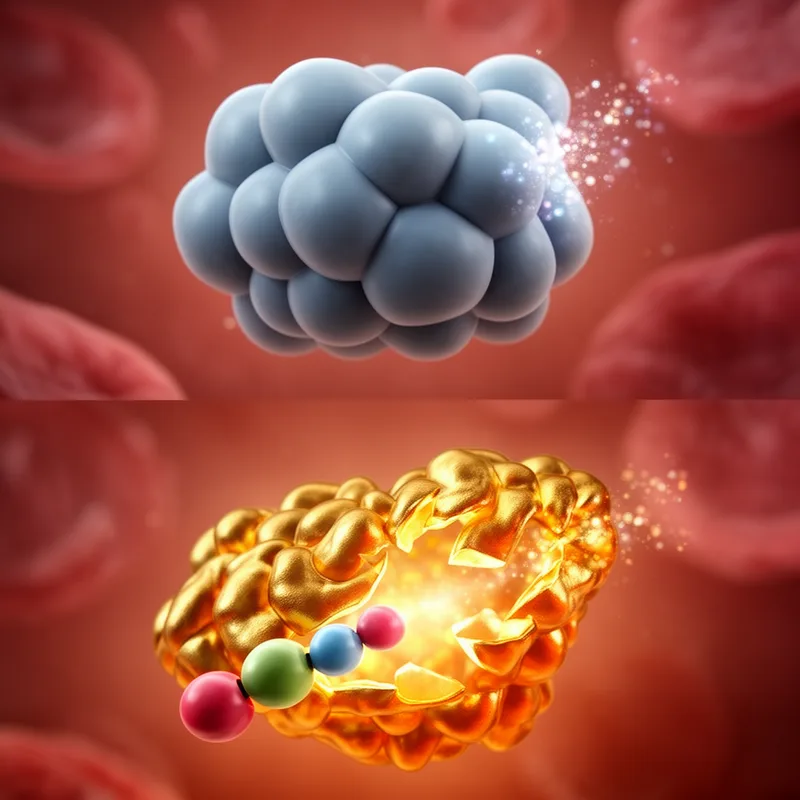
proenzyme
- noun
- /ˌproʊˈɛnzaɪm/
- Specialized
- The pancreas secretes proenzyme forms that are activated in the digestive tract.
Examples
-
During inflammation, the body rapidly converts this proenzyme into an enzyme to fight infection.
-
Many proenzymes are produced in the pancreas.
-
A genetic mutation may prevent a proenzyme from being properly converted into its active form.
-
The proenzyme is activated by a specific chemical reaction.
-
A genetic mutation may prevent a proenzyme from being properly converted into its active form.
-
During inflammation, the body rapidly converts this proenzyme into an enzyme to fight infection.
-
The pancreas secretes proenzyme forms that are activated in the digestive tract.
Synonyms
An inactive substance in the body that becomes an active enzyme after a chemical change
Surface Forms
Morphology
Etymology
Proenzyme begins with pro-, meaning 'before' as in prologue, and ends with enzyme, a protein that speeds up chemical reactions. So a proenzyme is a 'before' enzyme — an inactive form that becomes an active enzyme after part of it is changed.

