
procaryote
- noun
- /proʊˈkɛr.i.oʊt/
- Archaic
- Unlike a eukaryote, a procaryote does not have a true nucleus.
Examples
-
The scientist studied the genetic material of the procaryote under a microscope.
-
Many antibiotics are effective because they target the unique cellular structure of procaryotes.
-
A procaryote is a simple form of life.
-
Many procaryotes can survive in extreme environments.
-
Many antibiotics are effective because they target the unique cellular structure of procaryotes.
-
The scientist studied the genetic material of the procaryote under a microscope.
-
Unlike a eukaryote, a procaryote does not have a true nucleus.
Synonyms

 1
7.7
1
7.7

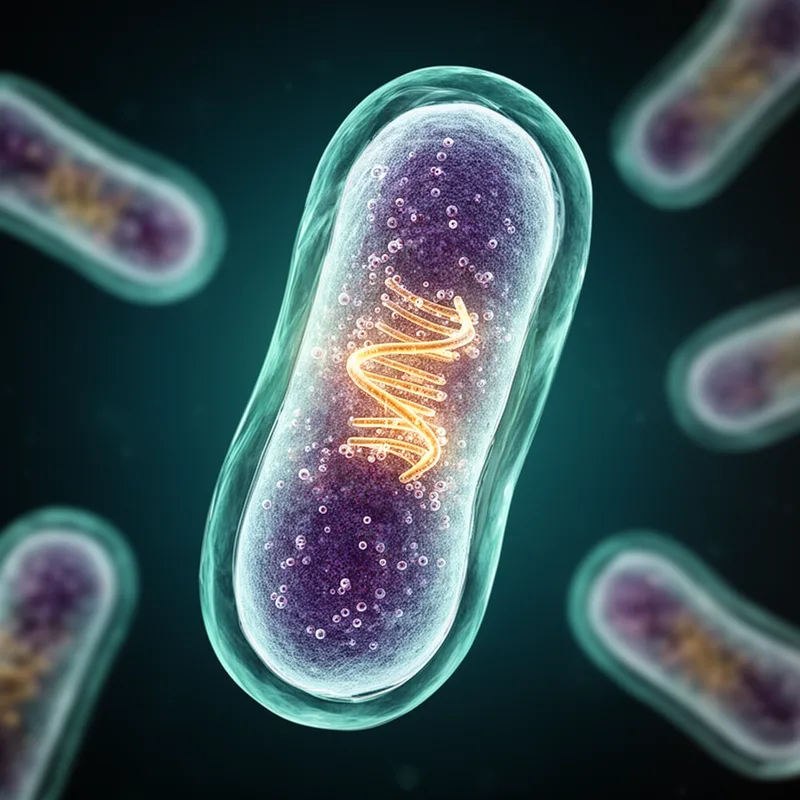
A single-celled organism with no nucleus, like bacteria
How Complex

Surface Forms
Morphology
procaryote = pro + caryote
Although built from the combining form 'pro-' (before) + 'caryote' (relating to a nucleus), 'caryote' is a technical combining form not a standalone English word, so an average B1 learner cannot derive the meaning from the parts.
Etymology
Procaryote comes from the parts pro- meaning 'before' and caryon meaning 'nut' or 'kernel', a simple picture people used for the cell's center or nucleus. So a procaryote is a cell that is 'before' a true nucleus, which is why procaryotes do not have a nucleus surrounded by its own membrane.