

printing process
 1
3.0
1
3.0

- noun
- /ˈprɪntɪŋ ˈprɔsɛs/
- For the most part, nineteenth-century liberals continued to pin their hopes on improvements in printing processes and on the continued expansion of a reading public.
Loading YouTube…
Watch on YouTubeIt's a money printing process that most will never grasp.
- It's a money printing process that most will never grasp.
- It can switch different heads during the printing process.
Examples
-
Marvel had started to change the paper and the printing process.
-
Clicking Print on this (or any other of the seven screens) initiates the printing process.
Academic text (2009) -
Last month's issue described the printing process in the Windows operating system.
Academic text (2009) -
Next month, the actual printing process for the Mac operating system will be covered.
Academic text (2009) -
Five major printing processes exist today.
Academic text (2001) -
To produce additional copies, a film master must be made and the printing process repeated.
Academic text (1992) -
All printing processes can be logically divided into two steps:
Academic text (2001) -
Digital printers work differently from the printing process used in offset printing.
Blog text (11) -
As the printing process is repeated to form subsequent layers, a green part eventually emerges ready for consolidation.
Academic text (1995) -
The printing process involves applying ink to paper to create high-quality images and text for publication.
Synonyms
 31
1.0
31
1.0
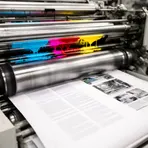
The process of putting ink on paper to make pages for books or newspapers
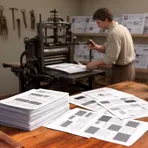
Making many copies of writing or pictures, usually by printing
How Industrial
- Specialized

 1
4.9
1
4.9
 1
3.0
1
3.0
- Archaic
- Specialized
3
3.7
Surface Forms
Morphology
The meaning 'a method of reproducing text or images' is directly and compositionally derived from 'printing' (ink transfer to produce text/images) combined with 'process' (a sequence of steps). This noun‑noun combination follows regular English compounding patterns and is cross‑linguistically common, so a B1 learner who knows both words would readily infer the meaning.
Etymology
The phrase printing process comes from the old idea of printing as pressing ink onto paper with a press or roller, like stamping letters to make a page. That's why it means a method for 'making many copies' of text or images.