

prince's pine
- noun
- /ˈprɪnsɪz paɪn/
- UK
- The small, glossy leaves of prince's pine are easy to recognize on a woodland walk.
Examples
-
We spotted a patch of prince's pine growing beneath the shade of the oaks.
-
The prince's pines thrive in shaded areas.
-
Botanists studied the medicinal properties of prince's pine during their forest survey.
-
I found a prince's pine in the forest.
-
The small, glossy leaves of prince's pine are easy to recognize on a woodland walk.
-
We spotted a patch of prince's pine growing beneath the shade of the oaks.
-
The prince's pine thrives in shaded areas of the forest.
Synonyms

A low evergreen plant with shiny leaves and small pink or white flowers used in traditional medicine
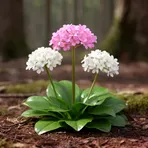
A small plant from Europe and Asia with white or pink flowers in a flat cluster
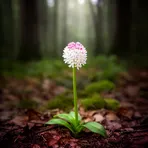
A small plant from Europe and Asia with white or pink flowers in a cluster at the top
Surface Forms
Morphology
prince's + pine
The form 'prince's' + 'pine' is compositional and an English B1 learner who knows both words will infer it denotes a plant (an evergreen) associated with or named after a 'prince'. However, the lexicalised name refers to a specific small herbaceous genus (Chimaphila) rather than a true pine tree, so the precise botanical sense and conventional usage are not fully predictable from the constituents.
Etymology
Prince's pine may come from the two parts prince's and pine: the plant's small, upright evergreen look reminded people of a tiny pine tree, and adding prince's made the name sound noble or special because the plant was used in 'medicine', which is why the name now means this small woodland evergreen.

